

From Sandhurst to the Savannah — The Remarkable Journey of a Luxury Travel Innovator
Most people who end up running a luxury safari empire don’t start by training at the Royal Military Academy Sandhurst. But then, Joss Kent has never followed a conventional script.
Before he became one of the most influential figures in global experiential travel, Kent was a Lieutenant in the Blues & Royals — one of the British Army’s most storied cavalry regiments. From there, he pivoted to Wall Street as a business analyst, then collected a Harvard MBA, then spent years as a management consultant at Bain & Company. London. New York. The African bush. It sounds like a film pitch, not a résumé.
But here’s the thing: every single one of those stops left a mark. The military instilled discipline and decision-making under pressure. Bain gave him the analytical rigour to stress-test a business model. Harvard taught him to zoom out. And his upbringing — son of Abercrombie & Kent CEO Geoffrey Kent, born and raised in Kenya — gave him something no MBA programme could: an almost cellular understanding of Africa.
When &Beyond appointed Kent as CEO in 2012, the company’s joint chairman Mark Getty was explicit about what they were looking for. They needed someone with “hard-nosed commercial experience and a deep understanding of the luxury safari business.” Kent was the rare executive who had both. Not one. Both.
That combination is rarer than it sounds. The luxury travel world is full of passionate conservationists who can’t read a balance sheet, and sharp operators who treat the bush like a theme park. Kent’s peculiar genius has been holding both things at once — and building an institution around that tension.
The &Beyond Playbook — Luxury with a Purpose
Let’s be honest: “sustainable luxury” is one of the most overused phrases in travel marketing. It’s been slapped on everything from bamboo toothbrushes in hotel bathrooms to carbon offset checkboxes at online checkout. It has, for many travellers, become noise.
So when Joss Kent talks about it, you’d be forgiven for bracing yourself.
But the &Beyond model is worth looking at more carefully, because it isn’t structured as a layer of ethics sprinkled over a commercial product. It’s baked into the architecture of the business. The company’s guiding philosophy — Care of the Land, Care of the Wildlife, Care of the People — isn’t a tagline. It’s the operating framework around which every lodge, every safari route, and every community partnership is organised.
Take the specifics. Under Kent’s leadership, &Beyond has participated in the reintroduction of endangered species including the black rhino. The company manages over 33 lodges and camps, and its model insists that when guests choose to travel with &Beyond, they are “making a conscious decision to have a positive impact on the places they visit.” That’s not just feel-good language — it’s a value proposition. Guests aren’t just buying an experience. They’re buying into an outcome.
Kent has been deliberate about tying conservation directly to commercial logic. The argument goes: if the wildlife disappears, the lodges have nothing to sell. If the local communities feel excluded and resentful, the operation becomes unsustainable. Enlightened self-interest? Perhaps. But it works — and it’s created something genuinely durable in an industry littered with short-term operators.
There’s also a design philosophy at play. As Kent has put it, “less is often more” — &Beyond emphasises the field experience over opulent lodge design. The star of the show is the wilderness itself: the guides, the rangers, the animals. The architecture serves the landscape rather than competing with it.
I believe this is a profoundly important insight. In a world where luxury is increasingly defined by excess, Kent has built a brand around restraint. That takes real conviction.
The CEO Who Admitted He Couldn’t Do It All
This is the part of Joss Kent’s story that I find most extraordinary — and it’s the part that gets talked about least.
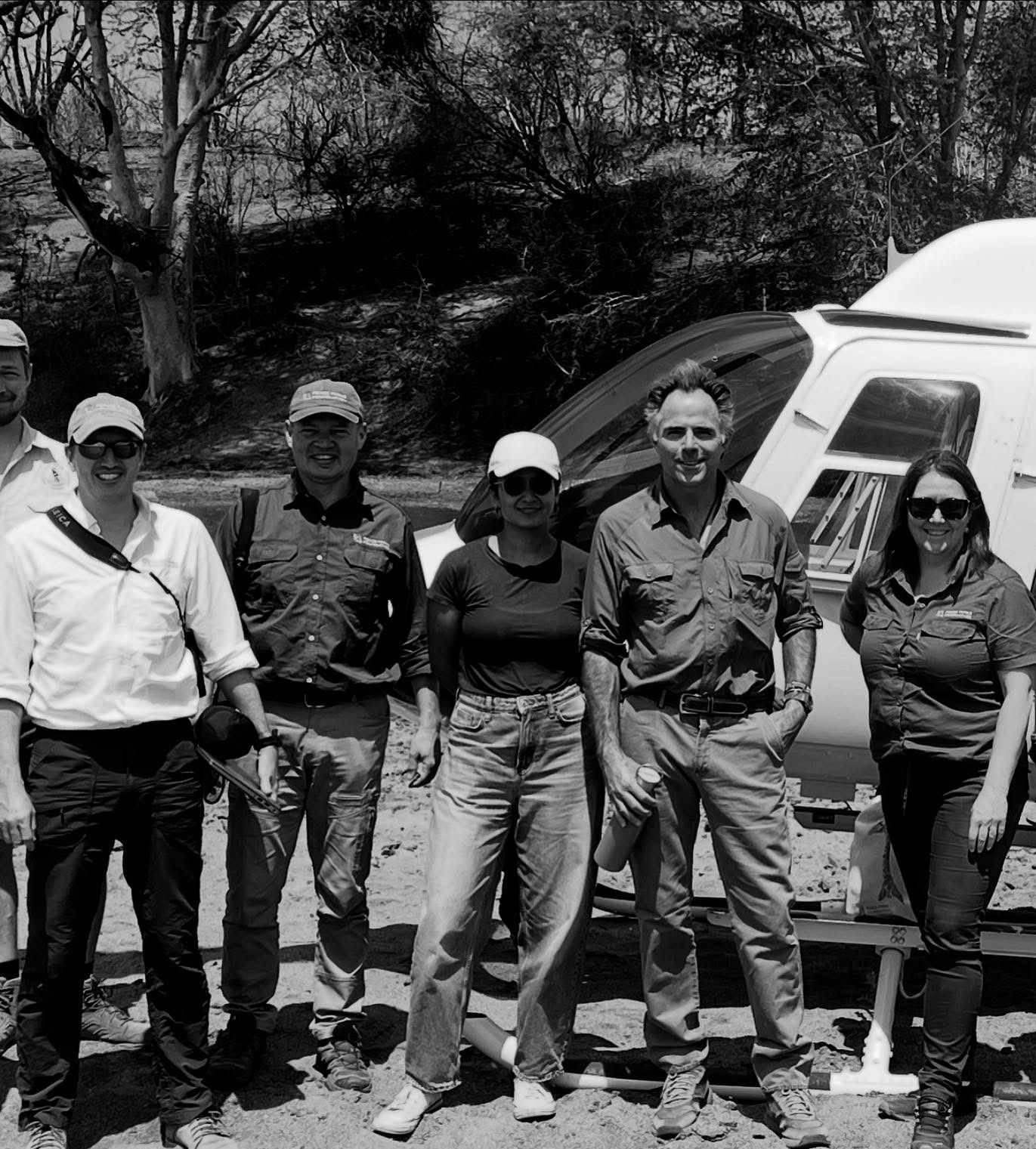
In February 2020, Kent sent a letter to &Beyond’s industry partners. In it, he announced he was stepping back from the CEO role. The reason? He was honest to a degree that is almost unheard of at his level. His travel schedule, he wrote, had been “relentless” — six months on the road every year for eight years. More than that, he was dealing with “very real family challenges related to the wellbeing of one of my children.”
Read that again. A senior executive of a global luxury company publicly cited the health of his child as a reason for restructuring Joss Kent’s professional life.
We’re so unused to this kind of transparency from the C-suite that it almost reads as shocking. Leaders at Kent’s level are expected to project invincibility. The unspoken deal in most boardrooms is: your personal life is your problem. The company comes first. Always.
Kent chose differently. He acknowledged — openly, in writing, to business partners — that “balancing the demands of the CEO role and offering consistent and available support to my family has become much more difficult.” And rather than quietly burning out or pretending everything was fine, he made a structural change.
He transitioned into the newly created role of Executive Chairman. He retained strategic influence while making space for someone to handle the operational weight. It was a grown-up, thoughtful solution — not a retreat, but a redesign.
Surprisingly, this didn’t hurt &Beyond. If anything, it signalled a leadership culture that values honesty over performance. And isn’t that exactly the kind of culture that builds long-term trust — with employees, with partners, with the market?
The 2026 Restructure and the Vision for Global Scale
Fast forward to early 2026, and Kent is at it again — reshaping the leadership architecture of &Beyond, this time for growth rather than personal balance.
Effective March 2026, &Beyond rolled out what it calls a “specialist-led leadership model.” Mark Wheeler, previously COO, was elevated to President of &Beyond Group, assuming responsibility for global day-to-day operations. A new COO for Lodges, Camps & Yachts was named. Regional managing directors were installed across Southern Africa, South America, and Asia. A dedicated Group Guest Experience Director was appointed to ensure consistent standards worldwide.
Every single appointment was made from within the organisation.
That last point matters more than it might seem. In an era of high-profile CEO searches and expensive executive headhunters, Kent and his team made a deliberate bet on institutional knowledge over imported talent. The reasoning is coherent: &Beyond’s culture — its DNA, as the company calls it — is its competitive moat. Bringing in outside operators risks diluting the very thing that makes the brand special.
The restructure also freed Kent himself to play a different game. Joss Kent’s focus now: long-term strategy, impact measurement, government and stakeholder engagement, and building the growth partnerships that will power &Beyond’s next decade. The company has clear ambitions in Asia — India, Nepal, Sri Lanka, and Bhutan are all in the crosshairs — and is deepening its footprint in South America alongside its established African operations.
Think about what that ambition means logistically. Running world-class conservation-linked lodges in the Bhutanese highlands requires an entirely different regulatory, ecological, and cultural playbook than managing a game reserve in Phinda. The complexity is staggering. And yet Kent seems energised by it — which perhaps explains why, even after stepping back from day-to-day operations in 2022, he never fully stepped back.
Does “Luxury Conservation” Actually Work — Or Is It Just Expensive Greenwashing?
Alright. Let’s ask the uncomfortable question.
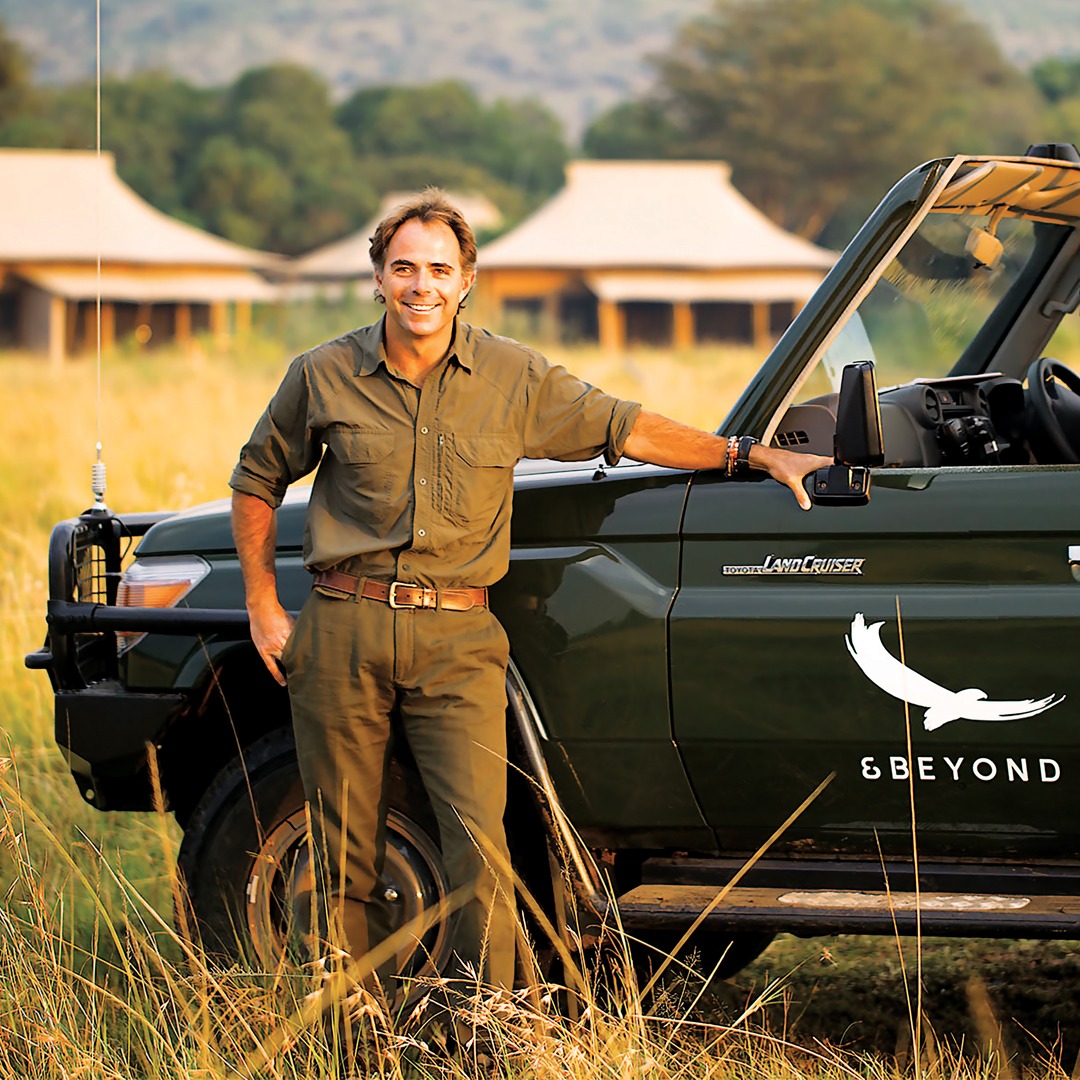
&Beyond lodges are not cheap. A stay at one of their flagship properties can run to thousands of dollars per night. The guests who fund these conservation outcomes — the wildlife corridors, the community schools, the anti-poaching patrols — are, almost exclusively, the global wealthy elite. Hedge fund managers. Tech billionaires. Retired diplomats.
So here’s the real challenge to Joss Kent’s model: can conservation that is structurally dependent on ultra-high-net-worth individuals ever truly scale? And if it can’t scale, is it really a solution — or is it a very beautiful, very well-intentioned band-aid?
Let’s break this down. The argument for the model is straightforward: it works where it’s deployed. The land is protected. The wildlife numbers move in the right direction. The local communities receive employment, infrastructure, and economic participation they wouldn’t otherwise have. Real outcomes. Measurable impact. This is not nothing — in fact, in many cases, it’s everything.
But the argument against is equally uncomfortable. If the only way to fund the survival of Africa’s remaining wild spaces is by charging $3,000 a night to Western tourists, then conservation has a structural dependency problem. What happens in a global recession? What happens when that demographic stops travelling? What happened, in fact, during COVID — when those lodges went dark, and the rangers still needed paying, and the poachers did not stop?
Kent himself gestured toward this fragility in 2021, arguing that the pandemic exposed how urgently the world needed to re-examine its relationship with nature. But the solution he proposed was more purposeful travel — a deepening of the model, not a reimagining of it.
I think Kent is genuinely one of the good ones. Joss Kent’s commitment to conservation isn’t performative — the man grew up in Kenya, ran safaris for heads of state, and has spent his entire adult life thinking about how to make the industry a force for ecological good. That’s real.
But the next frontier for &Beyond — and for the broader luxury conservation movement — isn’t another beautiful lodge in Bhutan. It’s figuring out how to build conservation finance models that don’t require a billionaire’s credit card to function. Government partnerships, conservation bonds, carbon credit frameworks, community land trusts — these are the building blocks of a model that could actually scale.
Kent is now positioned, more than ever, to push on exactly those levers. His 2026 role refocus — government engagement, stakeholder partnerships, long-term impact strategy — reads less like a semi-retirement and more like a man who has spent fifteen years learning the business, and is now turning his attention to something harder and more important.
The safari empire has been built. The real work, it turns out, may only just be beginning.