

Let’s be honest. The moment you start comparing flight prices, you enter a parallel universe where a ticket costs $29 and somehow ends up being $189 by the time you’ve added a carry-on, a seat that doesn’t face backwards, and the audacity to breathe recycled air.
Budget airlines get a bad rap. Some of it is fair. Some of it really isn’t. The truth is, the best budget airlines have quietly gotten good — modern fleets, reliable operations, decent apps, and route networks that would make a legacy carrier blush with envy.
We fly. We compare. We’ve watched the industry evolve from bare-bones flying buses to genuinely respectable carriers that just happen to charge extra for a window seat. So here’s our honest, no-fluff ranking of the best budget airlines in the world for 2026 — broken down by region, traveler type, and what you’re actually getting for your money.
Quick Comparison: Top 7 Budget Airlines at a Glance
| Rank | Airline | Region | Best For | Cabin Comfort | Value Rating |
|---|---|---|---|---|---|
| #1 | AirAsia | Asia-Pacific | Overall Budget Travel | ★★★★☆ | 9.5/10 |
| #2 | Ryanair | Europe | Ultra-Low Base Fares | ★★★☆☆ | 9.2/10 |
| #3 | Southwest Airlines | North America | No Hidden Fees | ★★★★☆ | 9.0/10 |
| #4 | Jetstar Airways | Asia-Pacific | Comfort on a Budget | ★★★★☆ | 8.8/10 |
| #5 | easyJet | Europe | Families & City Breaks | ★★★★☆ | 8.7/10 |
| #6 | IndiGo | South Asia | Punctuality & Reliability | ★★★☆☆ | 8.5/10 |
| #7 | Scoot | Asia-Pacific | Long-Haul Budget Travel | ★★★★☆ | 8.4/10 |
How We Ranked These Budget Airlines
We didn’t just throw darts at a board. Here’s exactly what went into this list.
Ticket Affordability
Base fares compared across comparable routes. We also looked at total cost once common add-ons (a carry-on and seat selection) were included — because headline prices lie.
On-Time Performance
Flight delays are not just annoying. They cost you money in missed connections, hotel nights, and sheer sanity. Reliability matters.
Route Network
The best budget airline for you is the one that actually flies where you want to go. We looked at both breadth (number of destinations) and depth (frequency of flights per route).
Baggage Policies
This is where budget airlines hide their personality. Some are generous. Some will charge you $70 for a bag you’d fit in an overhead bin anywhere else in the world.
Customer Reviews
Real traveler feedback across platforms, weighted toward repeat flyers who’ve experienced the airline across multiple routes and conditions — not just someone having a bad day.
Overall Value
The bottom line: what do you actually get for the money? Sometimes the cheapest base fare delivers the best experience. Sometimes it doesn’t.
Top 7 Best Budget Airlines Ranked
#1. AirAsia — Best Overall Budget Airline
AirAsia is the airline that made Asia’s skies affordable. Founded in Malaysia in 1993 and relaunched as a true low-cost carrier in 2001, it now operates one of the largest budget networks on the planet — connecting over 165 destinations across Asia and beyond. It’s been the benchmark for Asian low-cost travel for two decades, and it still earns that title in 2026.
What sets AirAsia apart isn’t just the prices (though they’re genuinely low — Bangkok to Bali for under $50 is still routinely achievable). It’s the system. Their Fly-Thru service allows seamless connections between AirAsia flights without the usual self-transfer headache, effectively giving budget travelers access to a hub-and-spoke network that used to be exclusive to full-service carriers.
The app is excellent. Flash sales are frequent and genuinely spectacular — fares up to 90% off during promotional windows. The fleet is young (predominantly A320s), and the airline maintains a strong on-time performance record across its core routes.
The catch? Add-ons stack up fast. Checked baggage, seat selection, meals — all extra. Budget carefully, and AirAsia is phenomenal value. Wing it, and your $39 fare can balloon.
Pros
- Enormous Asian network with over 165 destinations
- Genuinely low base fares with frequent flash sales
- Fly-Thru connections make complex itineraries manageable
- Young fleet, strong safety record
- Excellent mobile app
Cons
- Add-on fees can significantly inflate the total cost
- Customer service via human channels can be slow
- Airport experience varies wildly by hub
Best Routes
- Kuala Lumpur → Bangkok (~$30–55)
- Kuala Lumpur → Bali (~$40–70)
- Kuala Lumpur → Tokyo (~$100–180)
Overall Rating: 9.5/10
#2. Ryanair — Best for Ultra-Low Base Fares in Europe
Nobody undercuts Ryanair on base fares. Nobody. The Irish carrier pioneered the ultra-low-cost model in Europe with ruthless efficiency, and in 2026 it remains the continent’s most-used budget airline by sheer passenger volume — over 185 million passengers annually and counting.
Here’s the thing about Ryanair: it works brilliantly if you play by its rules. One small personal item, no checked bag, no frills, no surprises. Do all of that, and you’ll fly London to Barcelona for €15. Try to bring a carry-on without pre-booking, show up at the airport to print a boarding pass, or expect anyone to smile at you during boarding — and you’re in for a rough day.
The network is staggering. Ryanair connects over 40 countries across Europe, North Africa, and the Middle East, with secondary airports that are sometimes (fine, often) inconveniently located but significantly cheaper to operate through. Dublin to Rome for the price of a good lunch? That’s still Ryanair in 2026.
One thing to note: baggage fees have risen 15% in 2026 as fuel costs surge across the industry. Pre-booking everything online remains non-negotiable.
I’ll be direct: Ryanair won’t charm you. But for pure point-A-to-point-B budget efficiency in Europe, it’s still the king.
Pros
- Lowest average base fares in Europe
- Largest European route network — 40+ countries
- Frequent promotional deals and sales
- Transparent (if aggressive) fee structure
- Large, modern Boeing 737-8200 fleet
Cons
- Fees for almost everything beyond a small personal bag
- Secondary airport locations add time and transfer costs
- Customer service is notoriously difficult to navigate
- App has been criticised for misleading prompts during booking
Best Routes
- Dublin → London Stansted (~€10–25)
- London → Barcelona (~€15–40)
- Berlin → Warsaw (~€12–30)
Overall Rating: 9.2/10
#3. Southwest Airlines — Best Budget Airline in North America
Southwest is quietly the most traveler-friendly low-cost carrier on any continent. While Ryanair invented the idea of charging for everything and Frontier perfected the art of the confusing fare structure, Southwest went the other direction entirely: no change fees, no cancellation fees, and two free checked bags. In 2026, that’s genuinely radical.
It ranked as the top overall airline in WalletHub’s 2026 analysis (not just the best budget carrier — the best airline, period). The reasons are consistent performance across every category that matters to real travelers: reliability, affordability, comfort, and a fee structure that won’t give you a migraine.
The trade-off is the network. Southwest flies domestically within the US (plus a handful of Caribbean and Latin American routes) — so it’s not your answer for international travel. And the open seating policy (no assigned seats) remains divisive. Some people love the freedom. Others will spend 45 minutes hovering by the gate for an A boarding position. You know who you are.
For US domestic travel on a budget, Southwest remains the benchmark. Frontier may win on raw base fares — but once you’ve added a carry-on and a seat, Southwest often wins on total cost.
Pros
- Two free checked bags included — genuinely rare among budget carriers
- No change or cancellation fees
- Consistent on-time performance
- No seat selection fees (open seating)
- Strong domestic network across the US
Cons
- No assigned seating (boarding position matters)
- Limited international routes
- Less competitive on ultra-long-haul or international fares
Best Routes
- Dallas → Chicago (~$59–99)
- Los Angeles → Las Vegas (~$39–79)
- Houston → Cancún (~$99–149)
Overall Rating: 9.0/10
#4. Jetstar Airways — Best for Comfort in the Asia-Pacific Budget Segment
Jetstar is what happens when a premium airline (Qantas) decides to get serious about the budget market. Launched as Qantas’s low-cost arm, Jetstar sits slightly above the true ultra-low-cost tier — fares aren’t always the cheapest in the region, but the experience is consistently more comfortable than most of its rivals.
In 2026’s best low-cost carrier rankings, Jetstar secured a second-place finish globally — trailing only HK Express — largely thanks to genuine investment in onboard experience. We’re talking in-seat power on select aircraft, inflight entertainment options, and a legitimately decent cabin crew. For budget travel, that’s noteworthy.
The network covers domestic Australia extensively, with strong international routes across Southeast Asia, Japan, and the Pacific. If you’re flying Sydney to Bali or Melbourne to Tokyo, Jetstar should absolutely be in your comparison.
Families in particular will appreciate the more generous cabin baggage allowances and the generally more comfortable vibe compared to ultra-low-cost rivals.
Pros
- More comfortable cabin experience than most budget rivals
- In-seat power and IFE on select routes
- Strong Australia domestic + Asia-Pacific international network
- Backed by Qantas safety standards
- Multiple fare classes with good flexibility options
Cons
- Not always the cheapest option on routes where AirAsia also operates
- Add-ons for meals and baggage still apply on base fares
- Connections through secondary bases can be inconvenient
Best Routes
- Sydney → Bali (~AUD $150–220)
- Melbourne → Tokyo (~AUD $250–400)
- Brisbane → Singapore (~AUD $180–280)
Overall Rating: 8.8/10
#5. easyJet — Best for European Families and City Breaks
easyJet is Ryanair’s more civilized cousin. The fares aren’t always as jaw-dropping, but you’re far less likely to feel like the airline is working against you — and for families or anyone who values a smoother booking experience, that difference is real.
In 2026, easyJet consistently scores higher than Ryanair in customer satisfaction surveys, and it’s not hard to see why. The app is genuinely excellent — cleaner interface, easier flight changes, more reliable check-in. Their FLEXI fare includes free flight changes, which is worth its weight in gold if your travel plans have any uncertainty baked in.
The route network is substantial — covering 150+ destinations across Europe, North Africa, and the Middle East — though it trails Ryanair in sheer size. But coverage of major city airports (rather than secondary ones an hour from the city center) is a meaningful advantage for travelers who value their time.
For families specifically, easyJet’s allocated seating policy means you’ll actually sit together. A simple concept. Remarkably not universal.
The baggage fee situation has gotten pricier in 2026 across all European budget carriers (fuel costs are biting), so always pre-book your bags online. Airport surcharges remain eye-watering.
Pros
- Strong customer satisfaction scores vs. peers
- Best app in the European budget airline category
- Allocated seating — families sit together
- FLEXI fare offers genuine flexibility
- Major city airports (not just secondary ones)
Cons
- Base fares slightly higher than Ryanair on many routes
- Baggage fees have increased in 2026
- Network is smaller than Ryanair’s
Best Routes
- London → Amsterdam (~£25–60)
- Paris → Barcelona (~€30–70)
- Manchester → Lisbon (~£35–75)
Overall Rating: 8.7/10
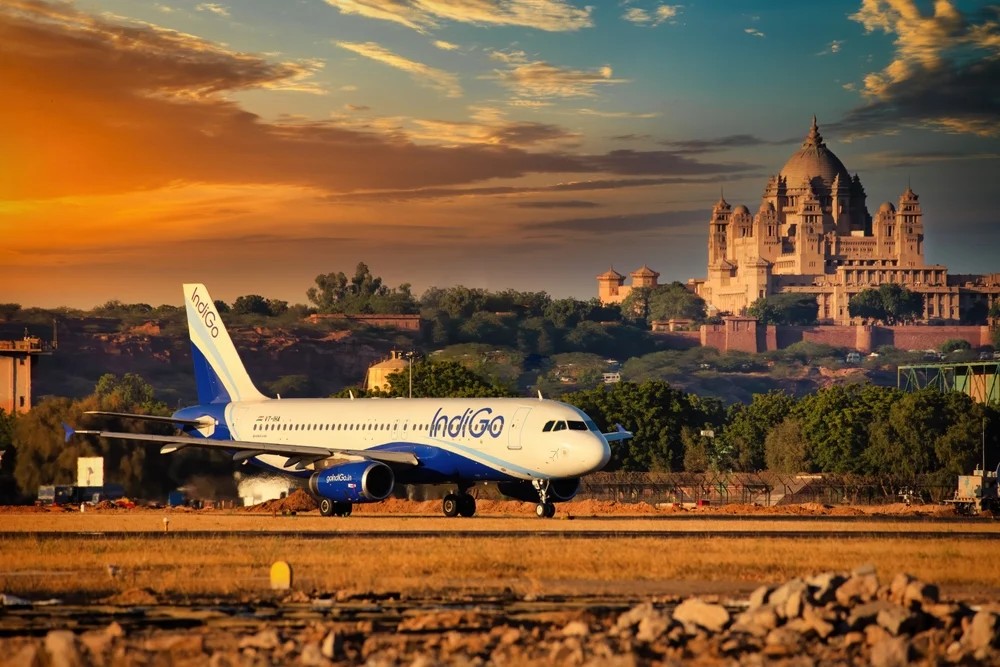
#6. IndiGo — Best Budget Airline in South Asia
IndiGo is possibly the most underrated airline on this list. While Western travelers obsess over Ryanair and AirAsia, IndiGo quietly dominates India’s domestic aviation market with a consistency that puts many larger carriers to shame. It holds over 50% market share in India’s domestic air travel — and it earned that position through relentless punctuality and low fares, not flash sales and gimmicks.
The numbers speak for themselves. IndiGo operates over 100 domestic Indian destinations and 30+ international routes, running one of the youngest fleets in Asia (predominantly A320neo family aircraft). It routinely tops India’s on-time performance charts, which in a country with notoriously complex airport operations is genuinely impressive.
Internationally, IndiGo has been expanding steadily across Southeast Asia, the Middle East, and Central Asia — making it an increasingly viable option for regional travel across the subcontinent.
The experience is utilitarian. Meals cost extra, legroom is standard-budget, and the seats aren’t going to win any design awards. But if you’re flying Delhi to Mumbai or Chennai to Dubai and you want to arrive on time without spending a fortune, IndiGo is the answer.
Pros
- Dominant domestic India network — 100+ destinations
- Outstanding punctuality record
- Young, fuel-efficient A320neo fleet
- Competitive international expansion across Asia and the Middle East
- Straightforward booking experience
Cons
- Cabin experience is purely functional
- Limited long-haul options
- Customer service quality varies significantly
Best Routes
- Delhi → Mumbai (~₹2,500–5,000)
- Mumbai → Dubai (~₹8,000–15,000)
- Bangalore → Singapore (~₹10,000–18,000)
Overall Rating: 8.5/10
#7. Scoot — Best for Long-Haul Budget Travel
Scoot does something most Best Budget Airlines won’t even attempt: it operates long-haul. As Singapore Airlines’ low-cost arm, Scoot has the backing, the expertise, and the route access to punch well above its weight class. Athens to Singapore. Berlin to Tokyo. Affordable, direct, actually bearable.
The airline operates four fare classes (Basic, Value, Flex, and ScootPlus), giving travelers genuine options to customize their experience. ScootPlus — their premium economy-ish class — offers lie-flat seats on some aircraft, which is a remarkable thing to type about a budget carrier.
The experience won’t match Singapore Airlines proper, and you shouldn’t expect it to. But for long-haul travel where full-service fares are eye-watering, Scoot offers a credible alternative that consistently ranks in the top three globally for low-cost safety ratings.
The luggage situation requires attention. Bags are purchased separately across all fare classes, and the pricing structure can be confusing on the first booking. Read the fare comparison table carefully. It’s worth it.
Pros
- Genuine long-haul routes at budget prices
- ScootPlus offers a legitimate premium option
- Strong safety record — top 3 globally for low-cost carriers
- Singapore hub connects excellently to worldwide networks
- Good inflight entertainment options
Cons
- Baggage structure is complex — read before you book
- Customer service has room for improvement (lost luggage cases documented)
- Base experience is quite basic at lower fare tiers
Best Routes
- Singapore → Tokyo (~SGD $150–250)
- Singapore → Athens (~SGD $400–650)
- Singapore → Berlin (~SGD $350–600)
Overall Rating: 8.4/10
Budget Airlines vs. Full-Service Airlines: An Honest Comparison
People act like this is a moral debate. It isn’t. It’s math.
| Feature | Budget Airlines | Full-Service Airlines |
|---|---|---|
| Base Fare | Lower (often dramatically) | Higher |
| Checked Baggage | Usually extra | Often included |
| Carry-On | Often restricted or extra | Usually included |
| Meals | Extra | Included |
| Seat Selection | Paid | Often included |
| Loyalty Programs | Weaker | More robust |
| Flexibility / Changes | Limited (or costly) | Better |
| Legroom | Typically tighter | Slightly more generous |
| Route Network | Niche + secondary airports | Comprehensive + major hubs |
| Overall Experience | Functional | More comfortable |
Here’s the real takeaway: for short-haul routes, Best Budget Airlines almost always win on total cost even after you’ve added a bag. For long-haul routes, the gap narrows significantly once you’ve priced in meals, comfort, and the value of arriving somewhere feeling human.
Which Budget Airline Is Best for Your Travel Style?
Best for Families
easyJet (Europe) or Southwest (North America). Allocated seating means no airport scramble with children. Southwest’s free checked bags are a game-changer with kids in tow.
Best for Solo Travelers
Ryanair or AirAsia — depending on your region. Travel light, book early, ignore every upsell, and your fare will be genuinely extraordinary.
Best for Backpackers
AirAsia, without hesitation. The flash sales are legendary, the network across Asia is unmatched, and the Fly-Thru connections let you build complex multi-country itineraries for next to nothing.
Best for International Flights
Scoot for Asia-Europe long-haul. AirAsia for intra-Asia international. easyJet or Ryanair for intra-European international — they’re essentially domestic at this point.
Best for Business Travelers on a Budget
Jetstar (ScootPlus if it’s Scoot) or Southwest in the US. The flexibility options and marginally better onboard experience make a difference when you’re actually trying to work in the air.
Tips for Saving Even More on Best Budget Airlines
Book early, but not too early. Counterintuitively, the sweet spot for short-haul routes is 6–8 weeks before departure. For long-haul, aim for 3–4 months out. Booking 6+ months in advance rarely gives you the best price.
Travel midweek. Tuesdays and Wednesdays are consistently cheaper across all budget carriers. Friday and Sunday flights serve the demand of people with actual jobs. Don’t be that person if you can help it.
Pack light like your wallet depends on it. Because it does. A carry-on that fits under the seat (not in the overhead bin) is free on most Best Budget Airlines. The moment you need the overhead bin, you’re paying — sometimes $40–80 each way. One underseat bag, worn-out sneakers on your feet, and a brutal wardrobe edit will save you more money than almost any other strategy.
Avoid optional add-ons at checkout. Travel insurance, priority boarding, airport lounge access — the checkout pages on budget airline websites are designed by talented people whose entire job is to extract money from you. Assess each add-on individually. Most of them, you don’t need.
Use airline reward programs. AirAsia’s BIG loyalty program and Scoot’s KrisFlyer integration both offer genuine value. Ryanair’s MyRyanair points program is less exciting but still worth activating if you fly them regularly.
Always compare total trip cost. That $29 Frontier fare to Denver vs. the $79 Southwest fare — add a carry-on bag to both, and Southwest often wins. Run the numbers every time.
Frequently Asked Questions
What is the best budget airline overall?
AirAsia earns that title in 2026 for its combination of genuinely low fares, an enormous network, reliable operations, and frequent promotional sales that are among the best in the industry.
Which budget airline has the cheapest fares?
Ryanair in Europe and Frontier in North America consistently offer the lowest headline base fares. The caveat: those fares come with very limited inclusions. AirAsia’s flash sales can rival both.
Are budget airlines safe?
Yes. All reputable Best Budget Airlines — including every airline on this list — operate under the same aviation safety regulations as full-service carriers. The trade-off versus legacy airlines is comfort and inclusions, not safety. HK Express, Jetstar, and Scoot ranked as the top three safest low-cost carriers globally in 2026.
Which budget airline is best for international travel?
Scoot for genuine long-haul budget international routes (Singapore–Europe, Singapore–Japan). AirAsia for intra-Asian international travel. Ryanair and easyJet for European cross-border routes.
Do budget airlines include checked baggage?
Generally no — checked baggage is an add-on on most budget carriers. Southwest Airlines is the notable exception, including two free checked bags on all fares. Always confirm what’s included before booking and pre-purchase baggage online to avoid significantly higher airport fees.
How can I find the cheapest budget airline tickets?
Set price alerts on tools like SkySonar or Google Flights, follow airline newsletters for flash sale announcements (AirAsia in particular), and book within the optimal window: 6–8 weeks for short-haul, 3–4 months for long-haul.
The Bottom Line
Best Budget Airlines aren’t for everyone. If you need flat-bed seats, a sommelier, and someone to warm your blanket — go full-service, and don’t look back.
But if you’ve accepted that the point of a short-haul flight is to get from one city to another, and you’d rather spend your money on the destination — the best budget airlines in 2026 are genuinely impressive options.
The overall winner is AirAsia for its unmatched Asian network, consistent reliability, and deals that still occasionally make you do a double-take. For Europe, Ryanair wins on raw price but easyJet wins on experience. In North America, Southwest remains the most traveler-friendly low-cost carrier by a comfortable margin. And for long-haul budget travel, Scoot is in a class of its own.
Before you book: check total cost including your bags, compare routes, and read the fare rules. The best budget airline is the one that flies where you need to go, on the date you need to fly, without any nasty surprises at the checkout page.
Safe travels — and may your carry-on always fit under the seat.