

HOI AN ANCIENT TOWN continues to stand out as one of Southeast Asia’s most remarkable cultural destinations, offering a rare glimpse into a trading port that flourished between the 15th and 19th centuries. Located in central Vietnam’s Quang Nam Province, the historic town earned UNESCO World Heritage status in 1999 and remains one of the world’s best-preserved examples of an international maritime commercial center. According to UNESCO, its original street plan, architectural heritage, and multicultural influences have survived with exceptional integrity.
Hoi An Ancient Town: How Vietnam’s UNESCO Trading Port Became a Global Heritage Success Story
For tourism leaders, heritage professionals, and business decision-makers, Hoi An represents more than a picturesque destination. It serves as a case study in cultural preservation, destination branding, and sustainable tourism development at a time when many historic cities struggle to balance growth with authenticity.
Why Hoi An Ancient Town Matters in 2026
Few heritage destinations demonstrate the connection between preservation and economic value as effectively as Hoi An. The town’s success stems from protecting its historic urban landscape while maintaining its role as a living community rather than turning it into a museum frozen in time.
UNESCO describes Hoi An as an exceptionally well-preserved example of a Southeast Asian trading port whose buildings and street layout reflect centuries of interaction between local traditions and foreign influences. This combination has made the town a benchmark for cultural tourism worldwide.
For the United States travel market, destinations that combine authenticity, walkability, cultural immersion, and historical significance continue to attract travelers seeking experiences rather than simply sightseeing. Hoi An checks every one of those boxes.
From Maritime Trading Hub to UNESCO World Heritage Site
The origins of Hoi An stretch back centuries along the Thu Bon River, a strategic waterway that connected inland regions with international trade routes. Archaeological evidence indicates commercial activity in the area long before the town reached its peak as a trading center.
Between the late 16th and early 18th centuries, Hoi An emerged as one of Asia’s most active commercial ports. Merchants from China, Japan, and Europe established trading networks that transformed the town into a major exchange point for goods, culture, and ideas.
Ironically, Hoi An’s later decline helped preserve it. As shipping patterns shifted and nearby ports gained prominence, economic activity moved elsewhere. While that reduced the town’s commercial importance, it also prevented large-scale redevelopment that might have erased its historic character. UNESCO notes that this period of stagnation contributed significantly to the preservation of its traditional urban fabric.
The Architecture That Defines Hoi An Ancient Town
Walking through Hoi An feels like stepping through multiple chapters of Asian maritime history at once.
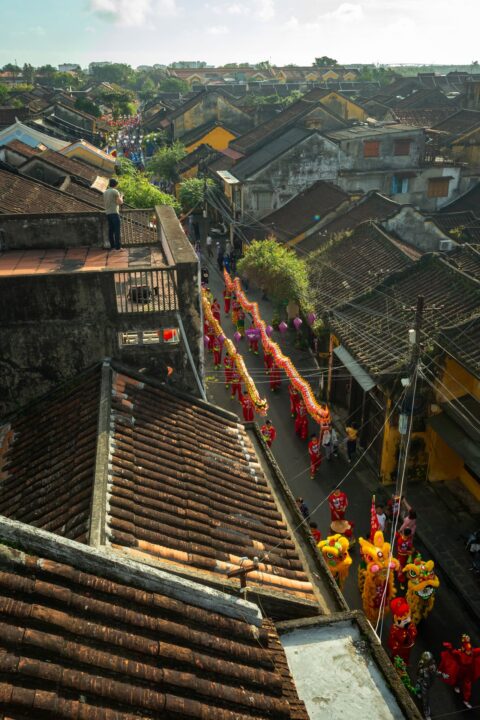
The UNESCO-listed area contains more than a thousand historic timber-frame buildings, including merchant houses, assembly halls, temples, markets, warehouses, and residential structures. These buildings remain arranged along the original street grid developed during the town’s commercial peak.
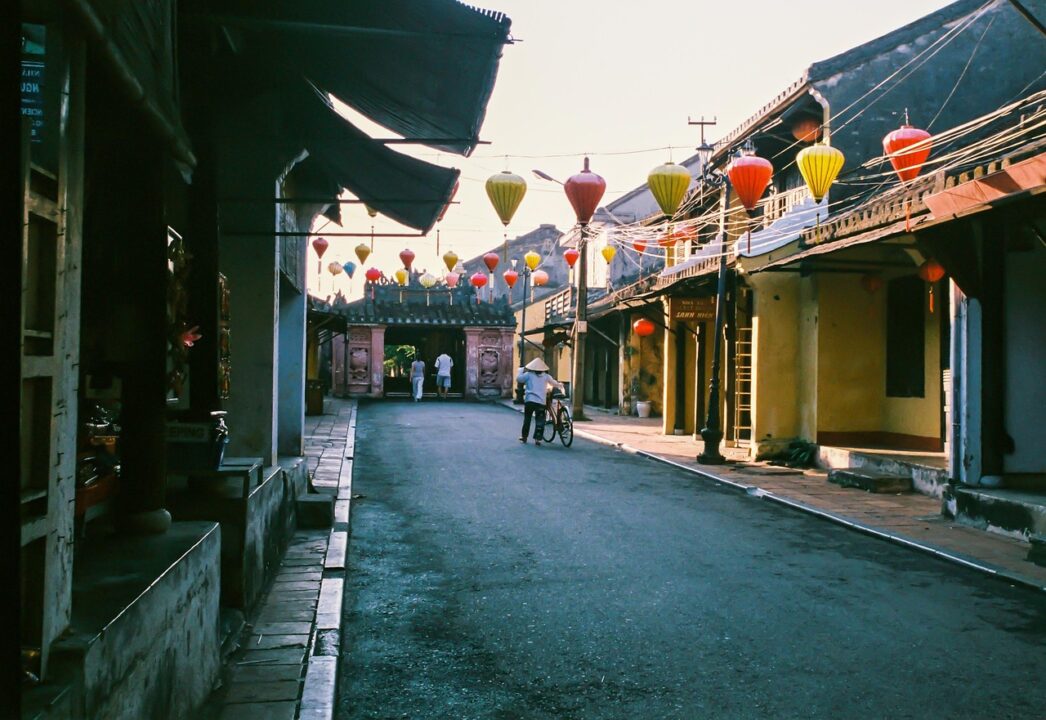
Among the most recognizable landmarks is the Japanese Covered Bridge, a symbol of the town’s international heritage and longstanding Japanese influence. Chinese assembly halls, Vietnamese communal buildings, and later European design elements further contribute to Hoi An’s distinctive appearance.
The result is not architectural uniformity. Instead, it is a rare example of cultural fusion visible in the physical landscape—a feature UNESCO specifically cites as central to the site’s Outstanding Universal Value.
UNESCO Recognition and Preservation Strategy
UNESCO inscribed Hoi An Ancient Town on the World Heritage List in 1999 under criteria recognizing both cultural exchange and the preservation of a traditional trading port.
The designation carries significant responsibilities. Conservation efforts focus on maintaining historic building materials, preserving the original street pattern, protecting riverfront environments, and ensuring that modern development does not undermine the site’s authenticity.
Unlike many heritage destinations, Hoi An remains a functioning urban center. Businesses operate from historic structures, residents continue traditional practices, and community life remains visible throughout the town.
A Living Example of Cultural Exchange
One of Hoi An’s greatest strengths is its multicultural identity.
Vietnamese, Chinese, Japanese, and European influences can be found throughout the town’s architecture, cuisine, religious sites, and cultural traditions. UNESCO describes Hoi An as a material manifestation of centuries of cultural fusion occurring within an international commercial port.
That diversity remains visible today. Traditional festivals continue to take place, religious buildings remain active, and many customs have been passed through generations. Rather than presenting culture as a historical artifact, Hoi An demonstrates how heritage can remain relevant in everyday life.
Economic Value Beyond Tourism
At first glance, Hoi An appears to be a tourism success story.
Look deeper, however, and it becomes a lesson in place branding. The town has built a globally recognized identity around authenticity, preservation, and cultural continuity. Those attributes create long-term economic value that cannot easily be replicated elsewhere.
For destination marketers and tourism executives, Hoi An demonstrates that heritage preservation is not merely a cultural investment. It can also serve as a competitive economic strategy when managed responsibly.
The town’s reputation has helped support hospitality businesses, cultural experiences, local crafts, culinary tourism, and international visibility for the broader Quang Nam region.
How Visitors Experience Hoi An Today
Modern visitors encounter a destination that balances history with contemporary travel expectations.
Lantern-lined streets, riverside walks, traditional architecture, local cuisine, tailoring workshops, cultural performances, and cycling routes remain among the town’s most popular attractions. The evening atmosphere, in particular, has become one of Hoi An’s defining experiences.
Not every traveler has the same reaction. Community discussions and visitor feedback often highlight both the beauty of the historic center and the challenges created by growing visitor numbers. Some travelers praise its atmosphere and food culture, while others point to concerns about overcrowding during peak periods.
That tension is increasingly common among globally recognized heritage destinations and underscores the importance of sustainable visitor management.
Challenges Facing the Ancient Town
Success brings complications.
Climate risks, overtourism pressures, conservation costs, and infrastructure demands all present ongoing challenges for Hoi An’s future.
Recent flooding events have demonstrated the vulnerability of historic urban environments to extreme weather. Recovery efforts have highlighted both the resilience of local communities and the importance of long-term preservation planning.
Managing tourism growth while protecting authenticity remains another key issue. Heritage destinations worldwide continue to search for ways to maintain cultural integrity without limiting economic opportunity.
What Business Leaders Can Learn from Hoi An
Perhaps the most important lesson is that differentiation matters.
Hoi An did not become globally recognized because it built the newest attractions or the tallest buildings. It succeeded because it protected what made it unique.
For tourism organizations, city planners, and destination brands, the town illustrates the value of preserving cultural assets as strategic advantages rather than obstacles to modernization.
In a world increasingly filled with interchangeable experiences, authenticity has become one of the most valuable forms of competitive positioning.
The Future of Hoi An Ancient Town
Looking ahead, Hoi An’s long-term success will depend on maintaining the balance between preservation, community needs, and tourism demand.
The town’s global reputation is built on authenticity, cultural diversity, and architectural integrity. Protecting those qualities will be essential if future generations are to experience the same living heritage that earned UNESCO recognition more than two decades ago.
For now, Hoi An Ancient Town remains one of the strongest examples of how cultural heritage, economic development, and global tourism can coexist when preservation is treated as a long-term investment rather than a short-term expense.
Frequently Asked Questions
Why is Hoi An Ancient Town famous?
Hoi An is famous for its exceptionally preserved historic architecture, multicultural heritage, lantern-lined streets, and UNESCO World Heritage status.
When did Hoi An become a UNESCO World Heritage Site?
Hoi An Ancient Town was inscribed on the UNESCO World Heritage List in 1999.
What makes Hoi An unique among Asian heritage cities?
Its combination of Vietnamese, Chinese, Japanese, and European influences remains visible in both architecture and cultural traditions.
Where is Hoi An located?
Hoi An is located in Quang Nam Province in central Vietnam near the mouth of the Thu Bon River.
What can tourism professionals learn from Hoi An?
Hoi An demonstrates how cultural preservation can become a sustainable economic asset and a powerful destination-branding strategy.