

Forget the crowded sunsets and cliché photo ops—discover the hidden romantic gems of Santorini that will make your heart skip a beat all year round.
Why Timing Is Everything for Couples in Santorini
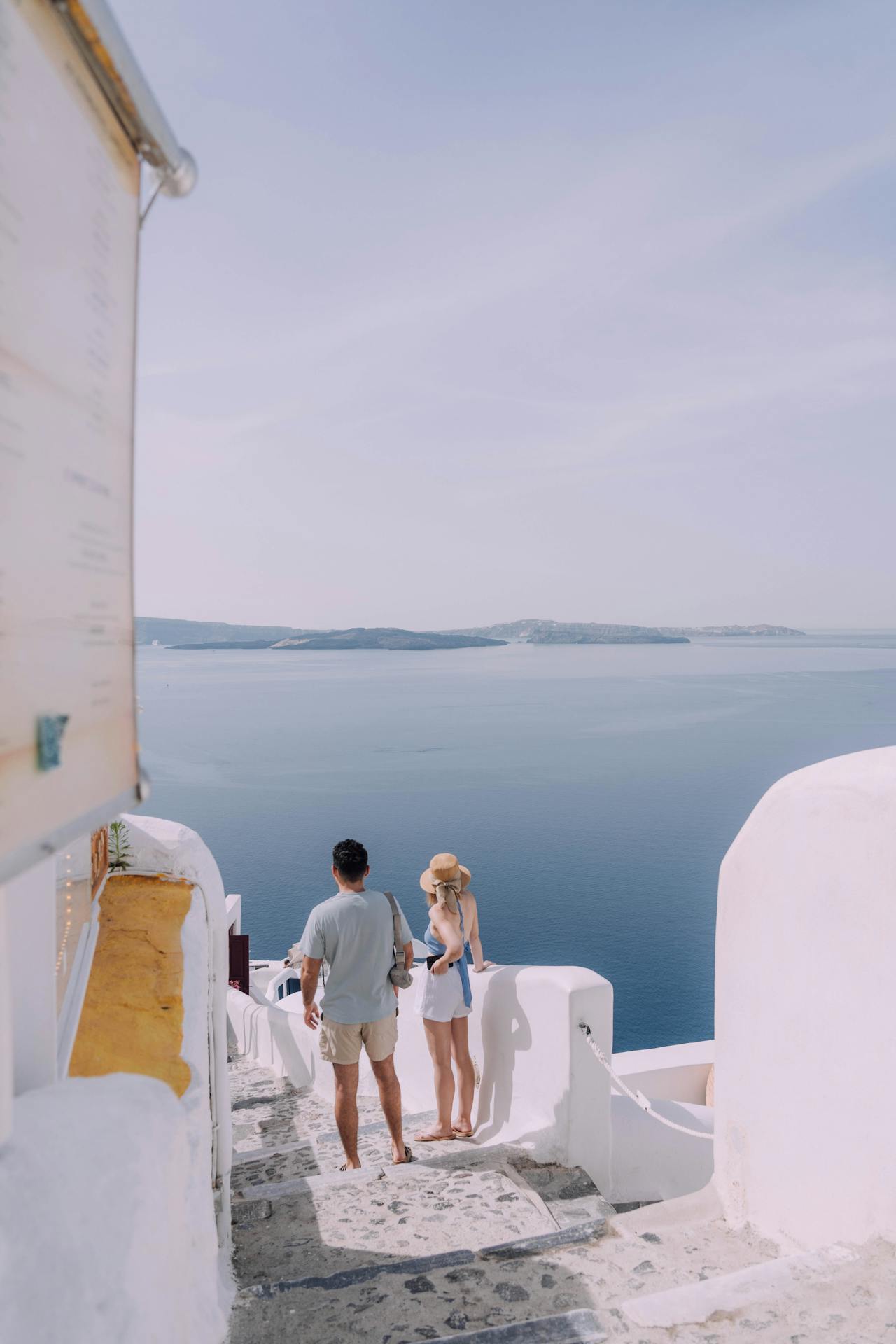
Let’s be honest. When most couples picture Santorini, they picture the same thing: that one shot. Blue domes. A white-washed infinity pool. Two cocktails at sunset, no one else in the frame. It’s everywhere — on Instagram, on travel blogs, on the mood boards of every couple planning a honeymoon.
Here’s the catch, though. That image is a lie — or at least, a very heavily curated half-truth.
For most of July and August, the narrow cobblestone path leading to Oia’s sunset viewpoint looks less like a romantic clifftop and more like a rush-hour subway platform. Hundreds of people, elbows out, phones raised, all waiting for the same ten-minute window of golden light. The restaurant you booked three weeks in advance is packed wall-to-wall. Your hotel pool — shared with half the building — has a “no reserving sun loungers” sign that nobody follows.
I’m not saying Santorini isn’t worth it. It absolutely is. I’m saying when you go changes everything.
And the good news? Greece figured this out too. In 2025, Santorini introduced strict daily caps limiting cruise ship passengers to 8,000 per day — down from peaks of 17,000 in a single day during 2024. A new cruise passenger levy added €20 per person during peak summer months. The overcrowded, Instagram-hellscape version of Santorini is, slowly but meaningfully, being dialled back.
The result is an island in quiet transition. And for couples who pick the right window, what’s waiting for you is closer to the fantasy than anything high season ever delivered.
Let’s break it down, month by month.
The Romantic Sweet Spots — Month-by-Month Climate Breakdown
April — The Quiet Opening Act
Average daytime temp: 17–19°C (63–66°F) Sea temperature: 16°C (61°F) — too cool for most swimmers Crowd level: ~40% capacity Price index: Low-to-mid
April is when Santorini wakes up. Wildflowers dust the volcanic hillsides, the light is soft and golden, and the island hasn’t yet made up its mind about whether it’s ready for summer. Most businesses are fully open by mid-April, but you’ll still find quiet mornings and near-empty streets in Oia.
For couples who love hiking, this is genuinely magical. The famous Fira-to-Oia trail — 10km of cliffside walking with views that will stop you mid-sentence — is still cool enough to enjoy without arriving as a sweaty wreck. Pack layers. The wind off the caldera can be sharp.
Romantic highlight: Wildflower season and uncrowded sunsets.
May — The Sweet Spot Begins
Average daytime temp: 22–24°C (72–75°F) Sea temperature: 19°C (66°F) — borderline swimmable Crowd level: ~55% capacity Price index: Mid (rising)
May might be the single best month for first-time visitors to Santorini — and it’s especially good for couples. The weather is warm enough for terrace dinners and beach walks without tipping into brutal heat. Everything is open. Prices haven’t yet spiked into peak-season territory.
Surprisingly, May also tends to get overlooked in favour of June and September, which means you’ll still find real breathing room at popular spots. Watching the sunset from Oia without a crowd three people deep in front of you? That’s a May thing.
Romantic highlight: Perfect hiking weather, warm evenings, and rising sea temperatures.
June — The Last of the Shoulder Season
Average daytime temp: 27–29°C (81–84°F) Sea temperature: 22–23°C (72–73°F) Crowd level: ~70% capacity Price index: Mid-high
Early June is genuinely excellent for couples. The sea is warm enough to swim, the evenings are balmy, and the pre-peak lull still holds for the first two or three weeks. But by late June, the shift happens — crowds build, prices jump, and the island starts to feel a little frantic.
If you’re planning a honeymoon, early June is widely considered the sweet spot. You get the full summer experience — warm swims, long sunset dinners, thriving nightlife — without the full summer circus.
Pack: Lightweight linen, sunscreen with serious SPF, a good cover-up for beach-to-dinner transitions, and sandals that can handle cobblestones (more important than you’d think).
Romantic highlight: Peak swimming conditions, buzzing restaurant scene, but still breathable.
July — High Season Arrives (Handle With Care)
Average daytime temp: 30–33°C (86–91°F) Sea temperature: 25°C (77°F) Crowd level: ~95% capacity Price index: Peak
July is Santorini’s most popular month, full stop. If you’re a couple who thrives on energy, wants the most vibrant restaurant scene, loves the idea of rooftop bars and late dinners under the stars — July delivers on all of that.
But let’s be real: it’s also the month where you’ll queue for 40 minutes at Oia’s sunset, pay premium prices for everything, and share your “secluded” hotel pool with ten strangers.
We often forget that romance isn’t just about beautiful backdrops — it’s about actually feeling present with your person, without the stress of crowds and heat and logistics. July makes that harder than it needs to be.
That said, the sea is glorious. If your romantic trip is primarily about swimming, snorkelling, and beach days, July (or August) delivers conditions that are hard to match.
Romantic highlight: Warmest sea temperatures, most vibrant nightlife and dining scene.
August — Peak Everything
Average daytime temp: 32–35°C (90–95°F) Sea temperature: 26°C (79°F) Crowd level: 100% capacity Price index: Peak (book 3–6 months ahead)
August is the month Santorini is most famous for. It’s also the month I’d be most cautious about recommending to couples seeking genuine romance. The island is at capacity. The famous sunset at Oia has become something of a contact sport. Reservations everywhere are essential — sometimes comically so.
If you’re going in August, the key is to lean into it rather than fight it. Book your restaurants weeks ahead, plan sunset-watching from somewhere less obvious (Imerovigli’s Skaros Rock, for example, offers similarly stunning views with a fraction of the crowds), and accept that the vibes are festive rather than intimate.
Pack: Your lightest possible clothing. August heat is serious.
Romantic highlight: The sea is at its absolute warmest and most inviting.
September — The Best Month for Couples. Full Stop.
Average daytime temp: 27–29°C (81–84°F) Sea temperature: 25°C (77°F) — still warm from summer Crowd level: ~65% capacity (falling steadily through the month) Price index: Mid-high, dropping toward month’s end
I’ll just say it: September is the month. If you are a couple planning a honeymoon, anniversary trip, or any kind of intentionally romantic visit to Santorini, late September is where you want to be.
The sea is still warm from summer — you can swim comfortably for weeks. The days are golden and warm but not punishingly hot. And crucially, the crowds are thinning. By late September, you can stand at Oia’s viewpoint for sunset and actually feel the moment rather than just photograph it.
Then there’s the grape harvest. Santorini is famous for its Assyrtiko wine, and September is when the vineyards come alive. Winery tours during harvest season are an entirely different, deeply local experience — sampling fresh vintages straight from the barrel with the caldera in the background is the kind of evening that doesn’t make it onto Instagram because you’re too busy just living it.
Romantic highlight: Wine harvest season, warm sea, thinning crowds, softer autumn light that photographers dream about.
October — The Hidden Gem Month
Average daytime temp: 22–24°C (72–75°F) Sea temperature: 22–23°C (72–73°F) Crowd level: ~40% capacity Price index: Mid-low
October is Santorini’s secret. It doesn’t have September’s glamour or June’s buzz, but for couples who want the island to feel genuinely theirs, October delivers something rare: real quiet.
Beaches are nearly empty. Restaurants, still open and fully operational, are suddenly easy to book. Hotel prices drop noticeably. The light turns amber and cinematic. You can wander the streets of Pyrgos or Megalochori — two beautiful villages that get bypassed in summer — without seeing another tourist for stretches at a time.
The sea is still swimmable, just about. The evenings call for a light jacket. And there’s an intimacy to the island in October that peak season simply cannot manufacture.
Romantic highlight: Harvest wine festivals, empty beaches, dramatically better hotel value.
November to March — The Brave Choice (and the Underrated One)
Average daytime temp: 10–17°C (50–63°F) Sea temperature: 17–18°C (63°F) — swimming only for the brave Crowd level: 10% capacity Price index: Low
We’ll come back to this season properly in Off-Season. For now: yes, much of the island is quieter, some businesses close, and you won’t be sunbathing. But the Santorini that exists in winter is something genuinely different — and for a certain kind of couple, it’s the most romantic version of all.
The Month-by-Month Climate Summary
| Month | Avg Temp | Sea Temp | Crowds | Prices | Best For |
|---|---|---|---|---|---|
| April | 17–19°C | 16°C | Low | Low | Hiking, wildflowers |
| May | 22–24°C | 19°C | Moderate | Mid | First-timers, all-rounders |
| June | 27–29°C | 22°C | Moderate-High | Mid-High | Honeymooners |
| July | 30–33°C | 25°C | Very High | Peak | Beach lovers, nightlife |
| August | 32–35°C | 26°C | Maximum | Peak | Sea swimming |
| September | 27–29°C | 25°C | Moderate | Mid-High | Romantic couples |
| October | 22–24°C | 22°C | Low-Moderate | Mid-Low | Wine lovers, budget-savvy |
| Nov–Mar | 10–17°C | 17°C | Minimal | Low | Off-grid escapes |
What to Pack for Each Season
One of the most underrated parts of planning a couples’ trip to Santorini is getting the packing right. The island’s terrain — volcanic rock, steep staircases, narrow cobbled alleys — combined with dramatically shifting evening temperatures means packing badly can genuinely affect your experience.
Here’s how to pack smart, by season.
Spring (April–May)
The vibe: Mild, breezy, golden-lit. Perfect for exploring on foot.
- Layers are essential. Mornings and evenings can be genuinely cold off the caldera. A light down jacket or structured blazer goes a long way.
- Comfortable walking shoes — not sandals, not heels. The Fira-to-Oia hike is stunning but uneven. Good trainers or trail shoes are your best friends.
- A light rain jacket. April especially can surprise you with a short shower.
- One elevated dinner outfit each. Spring evenings call for terraced dinners with views — have something that makes you feel good.
- Sunscreen. The Mediterranean sun is deceptive in spring. It doesn’t feel intense until you’re already burned.
Summer (June–August)
The vibe: Hot, vibrant, buzzing. Dress for heat and the evening transition.
- Lightweight linen, always. It breathes, it looks effortless, and it survives the heat better than anything synthetic.
- A quality cover-up for the beach-to-restaurant transition. Santorini’s beach clubs and caldera restaurants are casual-elegant — you need something that bridges both.
- SPF 50 minimum. July and August sun on volcanic rock is intense.
- Comfortable sandals that handle cobblestones. Flat, strappy sandals over heels for women. For men, leather sandals or light loafers.
- A small crossbody bag. You’ll be walking a lot in heat. Anything bulky becomes a burden quickly.
- Swimwear with real UV protection if you’re spending serious time on boats or beaches.
Autumn (September–October)
The vibe: Warm days, cooler evenings, harvest season. The most versatile packing season.
- Light-to-mid-weight layers. Days can still hit 27–29°C in September, but evenings in October will want a jacket.
- A wrap or pashmina — perfect for winery visits, cliff-edge dinners, and the occasional cool evening breeze.
- Versatile footwear — something that works for both beach and village walks. A good leather sandal or light canvas shoe covers most bases.
- A slightly smarter evening look. Autumn is when restaurants feel more intimate and lingering — dress for a long dinner rather than a quick bite.
- A small daypack for wine-tasting day trips and boat excursions.
Winter (November–March)
The vibe: Quiet, atmospheric, deeply local. Pack like you’re visiting the actual island, not the postcard.
- A proper warm jacket. Not a light layer — an actual coat. Evenings get cold, especially near the caldera.
- Rain gear. Winter on a volcanic island in the Aegean can be wet and windy.
- Casual, café-ready clothes. Winter Santorini is about long lunches, warming up in local coffee shops, and exploring at your own pace. Comfort over style.
- Waterproof walking shoes. The cobblestones are uneven in any season; add rain and they become an ice rink.
- A good book. Honestly. Winter Santorini rewards the kind of slow, present travel where you sit, watch the sea, and let the island come to you.
Romantic Experiences Unlocked by Season
Santorini offers different romantic experiences depending on when you arrive. Here’s a cheat sheet for couples.
Watching the Sunset Without the Crowd → Late September
Oia’s sunset is one of the world’s great travel experiences — and one of its most overcrowded. In July and August, the viewpoint fills up hours in advance. Arrive in late September and you’ll find space to breathe, to stand at the edge of the caldera together, and to actually feel something other than the pressure of the crowd around you.
Alternatively: Imerovigli’s Skaros Rock viewpoint gives equally spectacular sunset views and attracts a fraction of the visitors even at peak season.
A Private Beach Day → Early June or Mid-October
Red Beach, Perissa, and Kamari are legitimately beautiful. In July and August, they’re also packed. Visit in early June and the sea is warm enough to swim, but sunbeds are plentiful and the sand doesn’t feel like a festival campsite. Mid-October offers near-total solitude — you may have stretches of beach entirely to yourselves.
Winery Tours and the Grape Harvest → September–October
This is the romantic Santorini experience that most people completely miss. The island’s wine culture — particularly its ancient Assyrtiko grape, grown in basket-woven vines that protect against the Aegean wind — is extraordinary. Visiting a winery during harvest season means tasting wine that is days old, straight from the barrel, with the smell of fermenting grapes in the air.
Boutari, Santo Wines, and Domaine Sigalas all offer harvest-season experiences that feel a world away from the peak-season tourist circuit.
Luxury Cave Hotel Deals → November–March
Santorini’s iconic cave hotels — carved into the caldera cliff, with private plunge pools overlooking the sea — charge eye-watering prices in summer. In winter, those same rooms can drop by 40–60%. Canaves Oia, Mystique, and Andronis Luxury Suites all offer meaningful off-season rates. A couple who might not stretch to a cave suite in August can often afford it comfortably in January.
Hiking the Fira-to-Oia Trail → April or May
At 10km along the caldera rim, this hike is one of Greece’s most spectacular walks. It’s also genuinely strenuous — and in July or August, the heat makes it potentially dangerous. In April or May, the temperatures are ideal, the wildflowers are out, and the trail is quiet enough that you’ll spend stretches of it feeling like the island belongs only to you. Allow 3–4 hours, bring water, and stop for coffee in Firostefani halfway.
Section 5: Stop Chasing August — Why the “Off-Season” Is Actually the Most Romantic Season
Here’s the contrarian take. And I genuinely believe it.
The most romantic version of Santorini doesn’t exist in July or August. It never has.
I understand the pull. August is when Santorini looks the way it does in every photo you’ve ever saved. It’s warm, it’s buzzing, every rooftop bar is full of beautiful people, and the sea is like a warm bath. The energy is undeniable.
But romance — real, unhurried, connected romance — requires something August simply cannot provide: space. Quiet. The sense that a place belongs to you, even briefly.
In July and August, Santorini’s most famous moments are experienced alongside thousands of strangers. The sunset at Oia that you imagined sharing with your partner is, in reality, shared with somewhere between 500 and several thousand other people doing the exact same thing. The caldera view from your hotel terrace is gorgeous, but the ambient noise of peak season — parties, boat engines, the constant churn of day-trippers — never fully lets up.
Now consider this: in November or December, Santorini is almost a different island.
The streets of Fira and Oia are nearly empty. Local restaurants — the ones that stay open year-round and cater to the actual community rather than tour groups — are warm and unhurried. The caldera views are still breathtaking, softened by winter light and often cloud-draped in ways that feel more dramatic, not less.
Prices drop dramatically. Cave suites that cost €800 per night in August can fall to €200–300. Restaurant reservations are spontaneous. There’s no queue for anything.
And here’s the data point that seals it: Santorini’s own tourism data from 2025 showed that the island experienced significantly reduced visitor numbers due to new regulations and early-season disruptions — and travel industry insiders described it as offering a better actual visitor experience than any recent peak season. Lower prices. Shorter waits. Hotels eager to deliver.
We often confuse what looks romantic on a screen with what actually feels romantic in person. An empty cliffside path at dusk, your partner’s hand in yours, the Aegean turning silver below — that doesn’t require August. It requires choosing the right moment.
Winter Santorini is for couples who are less interested in performing a holiday and more interested in having one.
Bring good coats, pick a cave hotel with a heated plunge pool, book a table at a local taverna that hasn’t seen a tour bus in months, and watch the sun go down over the caldera with nobody else in your field of view.
That’s the postcard nobody’s selling. And it’s the one worth chasing.
Your Santorini, Your Timing
Here’s the simple version, for couples who want a quick answer:
- Want the best all-round romantic trip? Go in late September.
- Planning a honeymoon and want warmth plus some buzz? Go in early June.
- On a budget but want the full experience? Go in October.
- Want Santorini almost entirely to yourselves? Go in November through February.
- Willing to trade some crowds for the warmest sea? July — but book everything months in advance.
Santorini will meet you wherever you choose to show up. But the couples who leave feeling like the island gave them something real — not just something photogenic — are almost always the ones who showed up when nobody else did.
Plan accordingly.