

Ha Long Bay, Vietnam – The Only UNESCO World Heritage Guide You’ll Actually Enjoy Reading
Ha Long Bay is one of those places that makes you pause mid-scroll, squint at your screen, and ask — is that real?
It is. And somehow, it’s even better in person.
Tucked into the Gulf of Tonkin in northern Vietnam, Ha Long Bay is a seascape of over 1,600 limestone islands and islets draped in jungle, rising dramatically from emerald-green water. It’s been called one of the natural wonders of the world, and UNESCO agreed — inscribing it as a World Heritage Site in 1994, later expanding that recognition to include the broader Ha Long Bay–Cat Ba Archipelago.
This guide covers everything: the caves, the cruises, the best time to go, how to actually get there, and which parts of the bay are worth your limited vacation days. No filler, no fluff — just the stuff that matters.
Quick Facts About Ha Long Bay
| Fact | Details |
|---|---|
| UNESCO Status | World Heritage Site |
| Location | Quang Ninh Province, Vietnam |
| UNESCO Inscription | 1994 (expanded later for Cat Ba Archipelago) |
| Area | Approximately 1,500 sq km |
| Number of Islands | 1,600+ limestone islands and islets |
| Best Time to Visit | October–April |
| Recommended Stay | 2–3 Days |
| Nearest Airport | Van Don International Airport |
| Famous For | Limestone Karsts, Cruises, Caves |
What Makes Ha Long Bay Special? (Beyond the Obvious)
Let’s be honest — “beautiful bay with islands” describes a lot of places on earth. So what actually makes Ha Long Bay stand out from every other tropical destination your Instagram algorithm keeps shoving in your face?
It’s the scale.
Standing on the deck of a junk boat, surrounded by hundreds of limestone towers rising hundreds of metres out of perfectly still water, with mist clinging to the peaks at dawn — there’s genuinely nothing else like it. The landscape feels prehistoric. Ancient. Like the earth decided to do something completely unhinged and then just… left it there.
Geologically, Ha Long Bay is what’s known as a marine karst landscape. Over hundreds of millions of years, limestone bedrock was slowly dissolved and carved by rainwater and waves, creating the iconic jagged formations, hidden caves, and lagoons you see today. The Gulf of Tonkin then flooded the region, leaving only the peaks above water.
The result? One of the most dramatic seascapes on the planet.
UNESCO recognised it not just for its jaw-dropping aesthetics, but for its outstanding geological, aesthetic, and ecological significance. The bay is home to a rich ecosystem: coral reefs, tropical fish, rare marine mammals, and endemic plant species found nowhere else on earth.
Semantic keywords to know: marine karst, limestone karsts, Gulf of Tonkin, natural wonder, biodiversity, endemic species.
A Brief History of Ha Long Bay (The Actually Interesting Bits)
The Name Itself Is a Legend
“Ha Long” translates loosely to “Descending Dragon.” The legend goes that when Vietnam was under threat of invasion, a family of dragons descended from the heavens and spat jade and jewels into the sea — which then became the islands and islets of the bay, forming a natural barrier to protect the Vietnamese people.
Whether you buy the mythology or not, it’s a far better origin story than “geological karst erosion over 500 million years.” (Both are technically true.)
Geological Formation
The limestone formations you see today started taking shape during the Paleozoic era — roughly 500 million years ago. The karst topography developed through cycles of tectonic activity, sea-level change, and the slow, patient work of rainwater dissolving limestone over geological time. What you’re floating through on your cruise is essentially a fossil record of the earth’s deep history.
UNESCO Recognition
Ha Long Bay was first inscribed on the UNESCO World Heritage List in 1994, initially recognised for its outstanding aesthetic values. A second inscription followed in 2000 for its geological and geomorphological significance. More recently, the recognition was expanded to include the Ha Long Bay–Cat Ba Archipelago as a unified World Heritage property — a move that better captured the scale and ecological continuity of the broader region.
Ha Long Bay Location & How to Get There
Ha Long Bay sits in Quang Ninh Province in northeastern Vietnam, about 170 km east of Hanoi. The nearest major city with proper transport links is Halong City (also called Ha Long City), which serves as the main gateway.
From Hanoi
This is by far the most common route — and it’s straightforward.
- Limousine bus or private transfer: The most popular option. Dozens of operators run comfortable, door-to-door services from Hanoi’s Old Quarter directly to the cruise harbour. Journey time: roughly 3–4 hours. Cost: $10–$25 USD depending on the operator.
- Public bus: Cheaper, but slower and less direct. Not worth the hassle for most travellers.
- Private car: More flexibility, especially if you’re in a group. Expect to pay $60–$100 USD for a full car.
Most cruise operators include the Hanoi–Ha Long Bay transfer as part of their package. Always check what’s included before you book separately.
From Hai Phong
Hai Phong is the closest major city to the bay, sitting about 60 km to the southwest. If you’re flying into Hai Phong’s Cat Bi Airport, you can get to Ha Long City in under 2 hours by car or bus.
From Van Don International Airport
Van Don Airport is the closest airport to the bay — only about 50 km away. It opened in 2018 and is genuinely underused, which means smooth, uncrowded departures. Vietnam Airlines and Vietjet operate flights from Hanoi and Ho Chi Minh City. If you’re flying into Vietnam specifically to visit Ha Long Bay, this is the smart move.
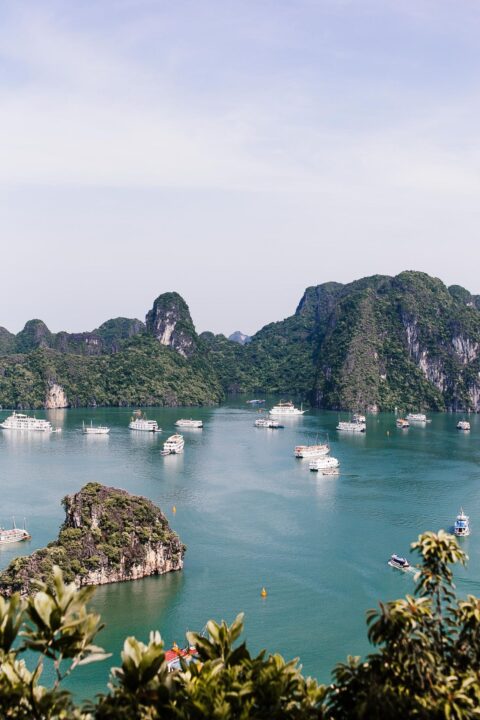
Top Attractions in Ha Long Bay
Here’s the thing — Ha Long Bay isn’t one attraction. It’s a whole archipelago of them. You’ll never see everything in one trip, and that’s kind of the point.
Sung Sot Cave (Surprise Cave)
The most visited cave in the bay — and arguably the most impressive. Sung Sot (which literally means “surprise” or “awe” in Vietnamese) is a two-chambered cave system large enough to hold a small village inside. The stalactites and stalagmites are genuinely spectacular, with coloured lighting that either enhances the drama or makes it feel like a 1990s nightclub, depending on your mood.
Visitor tip: Go early. By 10am it’s crowded. By midday it’s chaos.
Ti Top Island
One of the bay’s few proper beaches. Named after Soviet cosmonaut Gherman Titov (Ho Chi Minh was a fan, apparently), Ti Top Island offers a sandy beach, clear water, and a staircase to a viewpoint at the top of the hill that rewards you with one of the best panoramic views in the entire bay. The climb is steeper than it looks. Worth it.
Luon Cave
Skip the crowds, come here instead. Luon Cave is a small sea tunnel that opens into an enclosed lagoon — completely surrounded by karst cliffs, completely hidden from the outside world. You access it by kayak or bamboo boat (rowed by a local), floating through a low archway into a space that feels entirely secret. Monkeys sometimes hang out on the clifftops above. Genuinely magical.
Dau Go Cave
One of the oldest discovered caves in the bay, Dau Go (Cave of Wooden Stakes) has a historical backstory: legend has it that General Tran Hung Dao stored his wooden stakes here before his famous 1288 battle against Mongol forces. History aside, the cave itself is massive — three vast chambers filled with dramatic formations.
Bai Tu Long Bay
If Ha Long Bay is the famous sibling, Bai Tu Long is the cooler one nobody talks about. Lying just to the northeast, Bai Tu Long Bay shares the same geological character — limestone karsts, blue-green water, caves — but with far fewer tourists. If you’re on a 3-day cruise that ventures out here, consider yourself lucky.
Lan Ha Bay
Technically part of the Cat Ba Archipelago, Lan Ha Bay is on the southern side of Cat Ba Island and has become increasingly popular with travellers looking to escape the busier parts of Ha Long. It’s a favourite with kayakers and divers, with calmer waters and better visibility for snorkelling.
Floating Fishing Villages
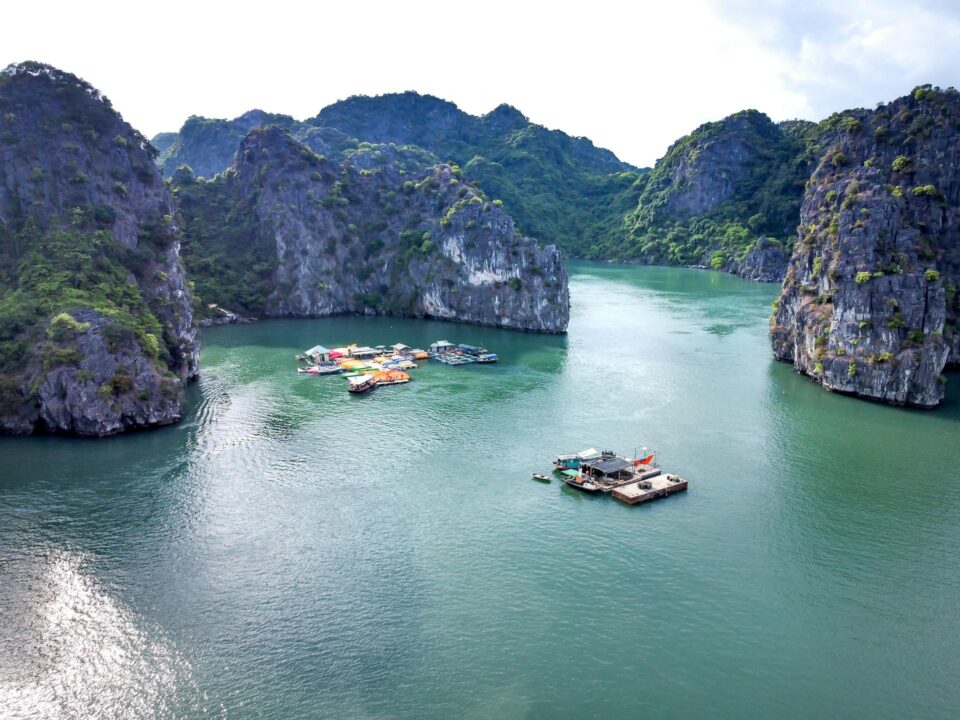
There are still communities living on the water here — though their numbers have declined significantly due to government resettlement policies. Villages like Cua Van and Vung Vieng offer a rare glimpse into a traditional way of life that’s slowly disappearing. Most cruise itineraries include a visit; pay attention, because this is the human history of the bay, not just the geological one.
Cat Ba Island
The largest island in the bay, Cat Ba is the main land base for exploring the wider archipelago. It’s got a proper town, hotels, restaurants, beaches, and the Cat Ba National Park — home to the critically endangered Cat Ba langur, one of the world’s rarest primates. If you want to spend time on land rather than floating, Cat Ba is your base.
Things to Do in Ha Long Bay
Take an Overnight Cruise
This is non-negotiable. Ha Long Bay without an overnight cruise is like going to Paris and skipping the Eiffel Tower. The sunrise over limestone karsts — watched from the deck of your boat, coffee in hand, absolute silence — is one of those experiences that resets your sense of what’s possible in the world. Do the overnight cruise.
Kayaking Through Limestone Lagoons
The single best activity in the bay. Kayaking through narrow passages between karst formations, drifting into hidden lagoons, floating in silence with cliff walls rising 100 metres on every side — this is the immersive experience you came for. Most cruises include at least one kayaking session. If yours doesn’t, change your cruise.
Visit Hidden Caves
Beyond the major caves, the bay is riddled with smaller, lesser-visited grottos. Your cruise guide will often know of spots off the main tourist circuit — ask them. The answer is usually yes, and the experience is infinitely better for the lack of crowds.
Swimming & Beach Activities
Not every part of the bay is ideal for swimming (water quality varies, and jellyfish are a thing in summer months), but there are clean spots — particularly around Ti Top Island and in the Lan Ha Bay area. Your cruise crew will know which beaches are best on any given day.
Sunset & Sunrise Photography
Ha Long Bay at golden hour is absurd. The light on limestone karsts at sunrise or sunset turns everything amber and pink and completely otherworldly. Position yourself on deck well before the sun moves — the best shots are in the first 20 minutes.
Squid Fishing
Most overnight cruises offer squid fishing off the back of the boat after dinner. It sounds like a gimmick. It is a gimmick. But it’s also genuinely fun, especially with a cold beer, and the crew will often cook what you catch. Try it.
Island Hiking
Several islands in the bay have marked trails to viewpoints above the karst formations. Ti Top Island is the most accessible. More serious trekkers head to Cat Ba Island for trails through the national park.
Best Ha Long Bay Cruises: What You Actually Need to Know
The cruise market in Ha Long Bay is enormous and wildly variable in quality. Here’s how to think about it:
| Cruise Type | Duration | Best For | Approximate Cost |
|---|---|---|---|
| Day Cruise | 4–8 Hours | Short Visits / Budget Travellers | $30–$60 USD |
| Overnight Cruise | 2 Days / 1 Night | Most Travellers | $100–$250 USD |
| Luxury Cruise | 2–3 Days | Premium Experience | $300–$700+ USD |
| Adventure Cruise | 2–3 Days | Kayaking & Exploration | $200–$450 USD |
A few things nobody tells you:
- The 2D/1N cruise is the sweet spot for most people. Long enough to see the bay properly; short enough that you don’t run out of things to do.
- Cheaper cruises are usually fine for the basics — the bay is the bay — but the difference in food, cabin quality, and itinerary depth is significant on a mid-range or luxury vessel.
- Book directly with reputable operators or through a trusted agent, not random walk-in offices in Hanoi’s Old Quarter. The price difference is rarely worth the quality gamble.
- Read recent reviews. Cruise quality can shift dramatically based on staffing and maintenance. A boat that was great two years ago might not be today.
Ha Long Bay vs Lan Ha Bay vs Bai Tu Long Bay
Because people ask this constantly — here’s the honest comparison:
| Feature | Ha Long Bay | Lan Ha Bay | Bai Tu Long Bay |
|---|---|---|---|
| Popularity | Very High | Medium | Low |
| Crowd Level | Higher | Moderate | Lowest |
| Scenery | Excellent | Excellent | Excellent |
| Cruise Options | Many | Growing | Limited |
| Best For | First-timers | Kayakers / Divers | Off-the-beaten-path |
| Access | Easiest | Easy via Cat Ba | Requires planning |
The short version: Ha Long Bay is the icon. Lan Ha Bay is where serious kayakers and divers prefer. Bai Tu Long Bay is for people who genuinely want to escape the crowds and don’t mind that fewer boats go there. All three share the same extraordinary geology.
If you’re visiting for the first time, Ha Long Bay. If you’re coming back — or want something quieter — look at the other two.
Wildlife and Biodiversity
Ha Long Bay is not just a pretty face. The bay is home to a remarkably complex ecosystem: coral reefs, seagrass beds, mangrove forests, and tropical rainforest on the islands themselves. Scientists have identified over 800 species of fish, 200 species of birds, and dozens of reptile and mammal species in the area.
The critically endangered Cat Ba langur — one of the world’s rarest primates — lives on Cat Ba Island and exists nowhere else on earth. Conservation efforts are ongoing and fragile.
Marine life includes seahorses, moray eels, barracuda, and occasional visits from dugongs in the bay’s southern reaches. Water quality and overfishing remain genuine conservation concerns, and responsible tourism operators actively promote minimal-impact practices.
If you care about seeing these ecosystems intact for another generation, choose operators that follow sustainable tourism guidelines. It’s not just marketing language — it actually matters here.
Best Time to Visit Ha Long Bay
The honest answer is: it depends on what you can tolerate.
October–April (Recommended)
This is the dry season, and the best time to visit. Weather is cooler (especially November–January, where temperatures in Halong City can drop to 15–18°C), visibility is clearer, and seas are calmer. February and March are particularly beautiful — misty mornings, cool air, and fewer crowds than peak summer.
Watch out for: January–February can be chilly on the water at night. Pack a layer.
May–August (Summer)
Hot and humid, with temperatures regularly hitting 33–35°C. This is the Vietnamese domestic holiday season, so expect more crowds, especially around major public holidays. The upside? Warm water, long days, and stunning golden-hour light.
The downside? Typhoon season runs from June through September. Not every summer trip gets derailed by weather, but it’s a real risk. Check forecasts obsessively if you’re going in these months.
September (Transition)
The tail end of typhoon season. Can be spectacular with dramatic skies and moody light. Can also be wet and disappointing. Gambling season.
| Month | Weather | Crowds | Cruise Conditions |
|---|---|---|---|
| Oct–Nov | Cool, clear | Moderate | Excellent |
| Dec–Feb | Cool, occasional mist | Low–Moderate | Very Good |
| March–April | Warm, clear | Moderate | Excellent |
| May–June | Hot, humid | Higher | Good |
| July–Aug | Hot, humid | Highest | Variable |
| September | Transition / Rain | Lower | Unpredictable |
Suggested Itineraries
1-Day Ha Long Bay Itinerary
Not ideal, but doable if you’re truly short on time.
Morning departure from Hanoi (6–7am), arrive at the harbour by 10am. Board a day cruise: visit Sung Sot Cave, kayak through a lagoon, swim at Ti Top Island, lunch on board. Depart by 4pm, back in Hanoi by 8pm. You’ll be exhausted, you’ll have seen fragments, and you’ll wish you’d booked more time.
2-Day / 1-Night Ha Long Bay Itinerary
The gold standard for most travellers.
Day 1: Arrive at harbour, board cruise, sail into the bay. Visit Sung Sot Cave or Luon Cave, kayak, sunset from the deck, dinner on board, squid fishing. Day 2: Early sunrise on deck. Morning kayaking or cave visit. Cooking class or Tai Chi on deck. Brunch, sail back to harbour, transfer back to Hanoi or onward to Cat Ba.
3-Day / 2-Night Ha Long Bay Itinerary
For the full experience. Extends into less-visited areas like Bai Tu Long Bay or Lan Ha Bay. More caves, more remote islands, more time to actually decompress. Strongly recommended for first-time visitors with the time to do it properly.
Photography Guide
Ha Long Bay is one of the most photogenic places on earth. Here’s how to make the most of it:
Best Sunrise Locations
The deck of your boat is the main stage. Position yourself facing east before 5:30am. Mist often sits low over the water in the early morning, which creates ethereal conditions even on cloudy days. Ti Top Island viewpoint is worth the climb for a wider panoramic shot.
Best Sunset Views
Ti Top Island again, or from the sundeck of your cruise boat. The light on limestone karsts turns extraordinary from about 5pm onwards in the dry season.
Drone Photography Tips
Drone regulations in Vietnam are strict and actively enforced. You need advance permission from the Civil Aviation Authority of Vietnam (CAAV) to fly commercially. Recreational drone use is technically restricted in many parts of Ha Long Bay. Check current rules before you pack one — the fine for illegal flying is real.
Most Instagrammable Spots
Luon Cave lagoon, the entrance to any dark grotto at golden hour, the fishing villages at dusk, Ti Top Island’s viewpoint, and the deck of your boat at sunrise with limestone silhouettes in the background.
Travel Tips (The Practical Stuff)
What to Pack
Light layers for evenings on the water (even in summer it gets breezy), motion sickness medication if you’re susceptible, reef-safe sunscreen, a dry bag for kayaking, comfortable shoes for cave exploration, and a decent camera. Leave the good camera gear at your hotel if you’re kayaking — spray is real.
Cruise Booking Advice
Book in advance, especially for October–April. Read recent TripAdvisor and Google reviews. Confirm exactly what’s included: meals, transfers, activities, and entrance fees. Ask about cabin size and layout — some “standard” cabins on budget boats are genuinely tiny.
Responsible Tourism
Choose operators that: dispose of waste properly, avoid anchor damage to coral, don’t encourage feeding or handling wildlife, and carry passengers at or below capacity. The bay is under genuine environmental pressure — the way you spend your money here has real consequences.
Safety Information
Ha Long Bay is generally very safe. Follow your guide’s instructions in caves (wet surfaces + poor lighting = slip risk). Always wear life jackets during kayaking sessions. Check weather forecasts before overnight cruises during typhoon season. Keep your valuables secured on board — petty theft is rare but not unheard of.
Nearby Places to Visit
Ha Long Bay pairs beautifully with:
- Hanoi — Vietnam’s capital is the obvious pairing, 3–4 hours by road. Culture, history, street food, chaos. Essential.
- Cat Ba Island — The largest island in the bay, with its own town, beaches, and the Cat Ba National Park. Spend 2 nights here and you’ll barely scratch the surface.
- Ninh Binh — Often called “Ha Long Bay on Land” for its similar limestone karst landscape. Dramatic, quieter, and completely different in character. Add 2 days here if you’re travelling slowly.
- Hai Phong — Vietnam’s third-largest city, largely overlooked by tourists, with good food and colonial architecture. Worth a half-day if you’re passing through.
FAQs About Ha Long Bay
Is Ha Long Bay a UNESCO World Heritage Site?
Yes. Ha Long Bay was first inscribed on the UNESCO World Heritage List in 1994. Its recognition was subsequently expanded to include the Ha Long Bay–Cat Ba Archipelago as a unified property, recognising both its geological significance and outstanding natural beauty.
Why is Ha Long Bay famous?
Ha Long Bay is famous for its extraordinary seascape of over 1,600 limestone karst islands rising from the emerald waters of the Gulf of Tonkin. It’s one of the most iconic natural landscapes in Southeast Asia and a UNESCO World Heritage Site. The combination of dramatic geology, cave systems, biodiversity, and traditional floating villages makes it genuinely unique.
How many islands are in Ha Long Bay?
Ha Long Bay contains over 1,600 limestone islands and islets, the vast majority of which are uninhabited. Only a small number are accessible to tourists on standard cruise itineraries.
How many days do you need in Ha Long Bay?
Most travellers find 2 days and 1 night sufficient to get a meaningful experience of the bay. 3 days / 2 nights is ideal for exploring beyond the main tourist areas. A single day trip gives you a taste, but it’s genuinely not enough.
Is an overnight cruise worth it?
Absolutely. Watching sunrise over limestone karsts from the deck of a boat in complete silence is one of the most memorable experiences in Vietnam — arguably in Southeast Asia. The overnight cruise is the non-negotiable centrepiece of any Ha Long Bay trip.
What is the best month to visit Ha Long Bay?
October through April is the recommended window, with November, March, and April being particularly good. The weather is clearer, seas are calmer, and the bay looks its best. February can be misty and cool, which is atmospheric in its own way.
Can you swim in Ha Long Bay?
Yes, in designated areas. Water quality varies around the bay, and jellyfish are present during summer months. The best swimming spots are around Ti Top Island and in the Lan Ha Bay area. Your cruise guide will advise on conditions on the day.
Is Ha Long Bay suitable for families?
Very much so. Most cruise operators have family-friendly itineraries. Caves, kayaking, fishing, cooking classes, and sunset photography are all accessible to children. Check cabin arrangements in advance — family rooms are available on most mid-range and luxury vessels.
How far is Ha Long Bay from Hanoi?
Approximately 170 km, which translates to 3–4 hours by road depending on traffic and your departure point. Most cruise operators include a Hanoi pickup as part of the package.
What are the best caves to visit in Ha Long Bay?
Sung Sot Cave (Surprise Cave) is the most impressive and most visited. Luon Cave is the most atmospheric. Dau Go Cave has the best historical backstory. If your cruise visits all three, you’re doing well.
How do I avoid tourist crowds in Ha Long Bay?
Head to Bai Tu Long Bay or Lan Ha Bay instead of (or in addition to) the main bay. Choose a cruise that departs on weekdays rather than weekends. Travel in the shoulder season (November or March) rather than peak summer months. Visit caves first thing in the morning before the day boats arrive.
What is the difference between Ha Long Bay and Lan Ha Bay?
They share the same geological character — limestone karsts, caves, emerald water — but Lan Ha Bay, located on the southern side of Cat Ba Island, sees far fewer tourists. It’s a favourite with kayakers and divers for exactly that reason. Ha Long Bay has more infrastructure and more cruise options; Lan Ha Bay has more peace.
Ha Long Bay is one of those rare places that actually lives up to its own mythology. The photographs aren’t exaggerated. The traveller descriptions aren’t hyperbole. It genuinely looks like that, feels like that, and stays with you in a way that most destinations simply don’t.
Go for at least two days. Do the overnight cruise. Get up early for the sunrise. Kayak somewhere quiet.
And maybe book a second trip before you’ve even finished the first one. It happens.