

Heathrow Airport isn’t just an airport. It’s the front door of the United Kingdom — a sprawling, occasionally chaotic, endlessly fascinating hub that handles more international passengers than any other airport on the planet. Whether you’re a frequent flyer, an aviation investor, a logistics manager, or just someone who finds airports inexplicably exciting, Heathrow is worth paying attention to right now.
In 2026, the airport is at a genuine inflection point. Passenger numbers have broken records two years in a row. A once-in-a-generation expansion debate has finally reached a decisive chapter. And the pressure to evolve — technologically, environmentally, commercially — has never been higher. Things are moving fast.
So what are the trends actually shaping Heathrow Airport in 2026? We’ve pulled together data, industry reports, and the airport’s own announcements to break it down for you. Here are 7 proven market trends you need to know.
Quick Facts: Heathrow Airport at a Glance
| Fact | Details |
|---|---|
| Official Name | London Heathrow Airport |
| IATA Code | LHR |
| Location | West London, England |
| Opened | 1946 |
| Terminals | 4 (Terminals 2, 3, 4, and 5) |
| Annual Passengers (2025) | 84.46 million (record high) |
| Runways | 2 parallel runways (operating near 98% capacity) |
| Destinations | 214 destinations across 84 countries |
| Owner | Heathrow Airport Holdings Limited |
| Major Airlines | British Airways, Virgin Atlantic, Lufthansa, Emirates, American Airlines, United, and more |
| UK Ranking | #1 busiest airport in the UK |
| Global Ranking | 5th busiest globally by passenger traffic |
What Makes Heathrow Airport So Important in 2026?
Let’s be blunt: Heathrow isn’t the biggest airport in the world by terminal square footage. It isn’t the newest. It’s famously constrained — just two runways handling nearly 85 million passengers a year, a feat of logistical audacity that few airports in the world could match.
But it remains Europe’s most influential aviation hub for a few very good reasons.
Global Connectivity
Heathrow connects to more destinations globally than any other airport — 214 direct destinations in 84 countries as of 2025. OAG has consistently ranked it the world’s most internationally connected airport. That’s not a vanity metric. For businesses and travellers, direct long-haul routes matter enormously, and Heathrow punches well above its size on that score.
Economic Impact
The airport contributes over £6 billion annually to the UK economy, according to current estimates. It handles more trade by value than the ports of Felixstowe and Southampton combined — a staggering figure that often gets lost in the conversation about flight delays and terminal queues.
Tourism Gateway
For international tourists visiting the UK, Heathrow is almost always the first thing they experience. With transatlantic and Asia-Pacific routes dominating passenger volumes, the airport effectively acts as Britain’s primary welcome mat to the world.
Business Travel Hub
London remains one of the world’s premier business cities, and Heathrow is the engine that keeps executive travel flowing. Premium cabin demand — business class, first class — is a key revenue driver for airlines operating at LHR, which is part of why the airport skews more toward full-service carriers than budget airlines.
Cargo Operations
Here’s one that doesn’t get nearly enough attention: in 2024, Heathrow handled 1.58 million tonnes of cargo worth an estimated £215.6 billion. In value terms, that’s the UK’s most important trade port — full stop. Over three-quarters of UK air cargo exports by value move through Heathrow’s freight terminals.
Heathrow Airport Market Overview (2026)
Annual Passenger Numbers
| Year | Passengers | YoY Change |
|---|---|---|
| 2019 (pre-pandemic peak) | 80.89 million | — |
| 2020 | 22.11 million | –72.7% |
| 2021 | 19.39 million | –12.3% |
| 2022 | ~61.6 million | Recovery phase |
| 2023 | 79.1 million | +28% |
| 2024 | 83.86 million | +5.9% (record at the time) |
| 2025 | 84.46 million | +0.7% (all-time record) |
Flight Operations (2025)
| Metric | 2025 Data |
|---|---|
| Total Aircraft Operations | 477,883 |
| Runway Utilisation | ~98% capacity |
| On-Time Performance | 72% (improved from prior year) |
| Average Delay | 15 minutes (down from 19 minutes in 2024) |
| Cancellation Rate | 1% (down from 1.4% in 2024) |
Top International Routes (by passenger volume, 2024)
| Destination | Region | Notes |
|---|---|---|
| New York (JFK/EWR) | North America | Consistently Heathrow’s #1 route |
| Los Angeles (LAX) | North America | High premium cabin demand |
| Dublin (DUB) | Europe | Short-haul; very high frequency |
| Madrid (MAD) | Europe | EU’s largest growth market from LHR |
| Dubai (DXB) | Middle East | Major hub-to-hub connection |
| Singapore (SIN) | Asia-Pacific | Key long-haul gateway |
Regional breakdown in 2024: EU destinations led with 28.1 million passengers (+7.4%), followed by North America at 20.6 million. Domestic UK routes saw the sharpest year-on-year growth at 10%, reaching 4.66 million passengers.
7 Proven Market Trends at Heathrow Airport
These are the Market Trends you actually came for. Let’s get into it.
1. Record-Breaking International Passenger Demand
The numbers don’t lie — and they’re impressive. Heathrow has now surpassed its pre-pandemic peak for two consecutive years, hitting 84.46 million passengers in 2025. That’s a new all-time record, coming on the heels of the previous record set just a year earlier in 2024.
What’s driving this? A few things working in concert. Long-haul demand from North America and Asia-Pacific bounced back strongly and has continued to grow. EU travel, which took a messy post-Brexit detour, has normalised and is now expanding. And domestic UK flying — often overlooked — grew 10% in 2024 alone, reflecting a busy calendar of business and leisure travel from London to Edinburgh, Manchester, and beyond.
Interestingly, the busiest single day in Heathrow’s entire history was 1 August 2025, when over 270,000 passengers passed through in one day. On a regular day, the airport averages over 231,000 passengers — roughly the population of a mid-sized city, every single day.
Key Statistics
| Metric | Figure |
|---|---|
| 2025 Annual Passengers | 84.46 million (record) |
| Growth vs 2024 | +0.7% |
| Growth vs pre-pandemic peak (2019) | +4.4% |
| Busiest single day ever | 270,000+ passengers (1 Aug 2025) |
Industry Impact
The sustained demand growth is putting real pressure on available capacity. With two runways operating at roughly 98% utilisation, there’s very limited room to absorb further growth. This constraint — as much as any trend — is driving the urgency behind expansion planning. Airlines are acutely aware that peak slot demand at Heathrow far exceeds supply, which keeps landing slot values at some of the highest in the world.
2. The Premium Travel Boom
Business class didn’t just survive the pandemic — it came back stronger. At Heathrow, where the airline roster skews heavily towards full-service carriers (think British Airways, Emirates, Lufthansa, Singapore Airlines), premium cabin demand has been a consistent bright spot in revenue performance.
Corporate travel rebounded faster than many analysts expected, driven by a shift in work culture. Executives who spent two years on video calls realised there are meetings that genuinely need to happen in person — and that flying business class for a 10-hour transatlantic journey is something they’re not willing to negotiate on.
Meanwhile, the leisure premium market — “bleisure” travellers, high-net-worth tourists, and the growing cohort of remote workers who fly business on a Friday to Paris or Dubai — has grown meaningfully. Airport lounges at Heathrow have responded in kind, with investment in premium experiences by airlines and the airport itself.
Terminal 5, BA’s dedicated hub at Heathrow, has consistently been rated among Europe’s best premium terminals. The Concorde Room — BA’s First Class lounge — remains a benchmark others struggle to reach. Heathrow’s own retail and VIP services were recognised as “Best in Class” by industry awards in 2024, which isn’t nothing.
Why It Matters
Premium passengers account for a disproportionate share of airline revenue. On a typical transatlantic route, business and first class can represent 10–15% of seats but over 40% of cabin revenue. Heathrow’s premium positioning is a structural competitive advantage — one that Gatwick, with its budget airline focus, simply cannot replicate.
3. Sustainability — More Urgent, More Complicated
Heathrow is trying to be green while simultaneously building a third runway. That’s a tension worth acknowledging honestly, rather than glossing over it.
The airport launched a refreshed sustainability strategy called Connecting People and Planet, featuring new targets following progress on earlier goals. It has also released its first nature-positive plan, committing to reduce biodiversity impacts and manage more land for conservation purposes. Heathrow says it aims to be net zero for airport operations (Scope 1 and 2) by 2030.
But here’s the catch. A third runway, if built, would increase flight traffic by roughly 50%. That’s an enormous increase in aviation emissions at a time when the sector is under serious scrutiny. Environmental groups have been vocal about the contradiction. The airport’s response has been to lean heavily on Sustainable Aviation Fuel (SAF) commitments and next-generation aircraft technology — a reasonable argument, but one that requires a lot of things to go right simultaneously.
Sustainable Aviation Fuel is genuinely gaining traction. The UK government has mandated increasing SAF blending requirements, and Heathrow has been working with airline partners to scale SAF usage. Still, SAF currently represents a tiny fraction of overall jet fuel consumption. The technology is real — the scale is not yet there.
To its credit, Heathrow committed to disclosing its environmental impacts and dependencies annually from 2025, bringing more transparency to how the numbers are moving.
Environmental Impact: The Honest Picture
This is one of the more contested aspects of Heathrow’s 2026 story. The airport’s sustainability goals are genuine and measurable. But expansion will generate real emissions increases. The industry’s hope — that SAF, operational efficiencies, and next-gen aircraft will offset growth — is a bet on future technology. Investors, regulators, and passengers are watching closely to see whether that bet pays off.
4. Digital Technology Is Transforming the Experience
The Heathrow experience of 2026 is genuinely different from 2019 — and most of the difference comes down to technology. Some changes are highly visible. Others are running quietly in the background, making operations faster and more efficient in ways that don’t make headlines but absolutely affect your journey.
Biometric technology is perhaps the most visible shift. Facial recognition is now embedded across key passenger touchpoints — check-in, bag drop, security lanes, and boarding gates. For passengers who have enrolled, the process is seamless and dramatically faster. Heathrow has invested heavily in making biometric gates a standard feature rather than a novelty lane, and the early results on security throughput times are encouraging.
AI-powered operations management is the less visible but arguably more impactful change. The airport uses predictive modelling to manage everything from baggage handling to gate allocation to security queue forecasting. The improvement in average delay times — from 19 minutes in 2024 to 15 minutes in 2025 — is partly a product of these systems working. That’s not an accident; it’s algorithmic optimisation at scale.
Automated check-in and self-service bag drop have expanded significantly. Most major carriers at Heathrow now offer near-complete self-service check-in, reducing the need for counter staff and — more importantly — reducing queues during peak periods.
Benefits for Travellers
Faster security. Faster boarding. More predictable journeys. The on-time performance improvement to 72% in 2025 reflects both better technology and better coordination between the airport and its airline partners. Still, 28% of flights aren’t on time — so there’s clearly room to keep improving. Technology is the tool; execution is still the challenge.
5. Cargo Operations Going from Strength to Strength
If passengers are Heathrow’s headline act, cargo is the quietly profitable support act that everyone forgets about. In 2025, the airport handled 1.55 million metric tonnes of freight — recovering strongly from pandemic lows and continuing on a long-term growth trajectory.
The cargo numbers from 2024 are particularly striking. Heathrow processed 1.58 million tonnes of cargo worth £215.6 billion. To put that in perspective: 76% of UK air cargo exports by value and 72% of all UK air cargo by value moved through Heathrow. The port handles cargo worth over £100,000 per tonne compared to roughly £1,330 per tonne for sea freight — which tells you exactly what kind of goods are moving through those freight sheds. Think pharmaceuticals, semiconductors, aerospace components, luxury goods, and perishables.
Ninety-five percent of Heathrow’s cargo travels in the belly hold of passenger aircraft — which means cargo revenues are directly linked to passenger route expansion. Every new long-haul passenger route that an airline launches from Heathrow also opens a cargo lane. It’s a virtuous cycle that few airports can replicate at this scale.
E-commerce has been an interesting tailwind. The demand for fast, reliable international parcel delivery has increased the importance of air freight for high-value goods. Heathrow’s established logistics infrastructure and unique animal-handling capabilities (it’s the only UK port able to handle all animal species) add further specialisation advantages.
Market Opportunities
With expansion plans on the table, a third runway would unlock new cargo capacity alongside passenger growth. The airport’s plan explicitly includes upgraded cargo facilities as part of the expansion proposal. Given cargo’s outsized contribution to UK trade value, this is as much an economic policy issue as it is an aviation one.
6. Fierce Airline Competition Driving Route Innovation
Heathrow slots are among the most coveted assets in commercial aviation. The airport operates at near-capacity, meaning the only way a new airline wins slots is if an existing carrier gives them up — or if regulatory intervention forces a reallocation. It’s a fierce, high-stakes market.
That scarcity drives interesting dynamics. Airlines that hold Heathrow slots guard them ferociously. Meanwhile, new entrants — particularly from the Middle East and Asia — have been systematically expanding their Heathrow presence over the past few years. Emirates, Qatar Airways, Etihad, and Singapore Airlines have all deepened their LHR operations, competing aggressively on long-haul routes where premium demand is highest.
On the transatlantic corridor, the BA-American Airlines partnership faces growing competition from Delta’s partnership with Virgin Atlantic, which has invested meaningfully in its Heathrow presence. The result is more capacity, more competition, and — eventually — more options and better pricing for passengers.
Emerging destinations are also part of the story. As aviation demand grows in Africa, South Asia, and Southeast Asia, Heathrow is well-positioned to capture hub traffic flowing through London. Routes to secondary Indian cities, East African capitals, and Southeast Asian hubs have all grown in significance.
Impact on Ticket Pricing
Competition on long-haul routes from Heathrow has generally kept fares from spiralling out of control — despite the capacity constraints. The premium cabin competition is particularly intense. Airlines upgrading their business class products (BA’s Club Suite, Virgin’s new Upper Class, Cathay’s Aria Suite) are competing not just on price but on the quality of the experience, which is ultimately good news for travellers.
7. The Third Runway — This Time It’s Real
For decades, the Heathrow third runway debate has been the UK’s great infrastructure saga — endlessly discussed, frequently cancelled, never built. But 2025 and 2026 have brought genuine momentum that feels qualitatively different from previous rounds.
In January 2025, Chancellor Rachel Reeves pledged support for a third runway to boost UK economic growth. By November 2025, the UK government formally endorsed Heathrow’s £49 billion expansion and upgrade plan as the basis for building a new runway. In January 2026, Heathrow’s Board greenlit work on the formal planning application.
The proposal itself is ambitious. Heathrow’s plan calls for a new 3,500-metre northwest runway capable of handling all aircraft sizes, a new terminal complex to the west of Terminal 5 (designated T5X and T5XN), upgraded cargo facilities, new surface access, and — most dramatically — a realignment of the M25 motorway beneath the new runway via a tunnel. The total investment is privately financed, with the airport committing to use UK steel throughout the supply chain.
The potential upside is enormous. A third runway would add up to 276,000 additional flights per year, unlock at least 30 new destinations, and allow Heathrow to serve up to 150 million passengers annually. The economic case — jobs, trade, GDP growth — is hard to argue with.
Key 2026 milestones include: the Civil Aviation Authority’s decision on cost recovery (spring 2026), the Department for Transport’s publication of a draft Airports National Policy Statement (summer 2026), and a Parliamentary vote on the final policy statement (autumn 2026). First flights from a third runway are targeted for approximately 2035.
Airline concerns about affordability — particularly from low-cost carriers who fear soaring landing charges — remain real. Environmental opposition hasn’t gone away either. But the political will is there in a way it hasn’t been before. Watch this space very carefully.
Future Outlook
If the regulatory and policy framework falls into place through 2026 as scheduled, the planning application will be filed, and Heathrow enters a new decade-long construction and expansion phase. That would be the most significant transformation in the airport’s 80-year history — and one of the largest infrastructure projects in British history.
Heathrow Airport Passenger Statistics: Full Historical View
| Year | Passengers (millions) | Notes |
|---|---|---|
| 2015 | 74.99 | — |
| 2016 | 75.71 | — |
| 2017 | 78.01 | — |
| 2018 | 80.12 | — |
| 2019 | 80.89 | Pre-pandemic record |
| 2020 | 22.11 | COVID-19 impact |
| 2021 | 19.39 | Travel restrictions |
| 2022 | ~61.6 | Recovery begins |
| 2023 | 79.1 | Near pre-pandemic level |
| 2024 | 83.86 | Record (at time) |
| 2025 | 84.46 | New all-time record |
Heathrow Airport vs Other Major European Airports
| Airport | Country | Passengers (approx. latest) | Runways | Global Ranking |
|---|---|---|---|---|
| Heathrow (LHR) | United Kingdom | 84.5 million (2025) | 2 | 5th globally, 1st in Europe |
| Paris Charles de Gaulle (CDG) | France | ~68 million | 4 | Top 10 |
| Amsterdam Schiphol (AMS) | Netherlands | ~62 million | 6 | Top 15 |
| Frankfurt Airport (FRA) | Germany | ~60 million | 4 | Top 15 |
| Istanbul Airport (IST) | Turkey | ~85 million | 3 | Top 5 |
| Madrid Barajas (MAD) | Spain | ~62 million | 4 | Top 20 |
Heathrow’s unique position: Despite being constrained to just two runways, it matches or exceeds competitors with four or more runways in passenger throughput. That’s a testament to operational intensity — but also a clear sign of why the capacity argument for expansion is so compelling.
Economic Impact of Heathrow Airport
The economic argument for Heathrow is frankly staggering when you lay it all out. The airport doesn’t just move people — it moves trade, investment, talent, and money at a scale that dwarfs most UK sectors.
Employment Generation
Heathrow directly and indirectly supports over 140,000 jobs across its supply chain. The airport’s own workforce, combined with airlines, ground handlers, retailers, logistics companies, and associated businesses, makes Heathrow one of the largest employment ecosystems in southern England.
Tourism Contribution
Inbound tourism through Heathrow contributes billions annually to the UK visitor economy. With direct routes from North America, the Gulf, Asia, and Africa, the airport is the primary gateway for the high-spending international visitors that UK tourism depends on.
Trade Facilitation
This one is worth emphasising again: Heathrow handles over a fifth of all UK goods trade by value. The cargo moving through Heathrow’s freight terminals connects UK manufacturers, pharmaceutical companies, technology firms, and exporters to markets they simply couldn’t reach efficiently any other way. Almost two-thirds of all air cargo in the UK moves through Heathrow — rising to over 75% for non-EU trade.
Regional Development
The benefits aren’t confined to London. Heathrow’s supply chain reaches manufacturing regions in the Midlands, Wales, and the North East. The planned expansion explicitly includes a commitment to sourcing UK steel and creating supply chain opportunities across the country — a deliberate regional growth strategy embedded in the infrastructure plan.
| Economic Indicator | Figure |
|---|---|
| Annual contribution to UK economy | Over £6 billion |
| Jobs supported (direct + indirect) | 140,000+ |
| Cargo value handled annually | £215.6 billion (2024) |
| Share of UK air cargo by value | 72%+ |
| Airport revenue (2025) | £3.6 billion |
Future Outlook for Heathrow Airport
Expected Passenger Growth
With capacity near its current maximum, significant passenger growth before 2035 is constrained. Marginal gains will come from larger aircraft, higher load factors, and operational optimisation. The step-change in capacity only happens when (and if) the third runway comes online. By that point, Heathrow’s stated ambition is to serve up to 150 million passengers annually.
Technology Investments
The airport’s multi-billion-pound investment programme, announced in early 2025, spans terminal upgrades, digital infrastructure, and passenger experience improvements. Expect continued rollout of biometric technology, AI-driven operations management, and infrastructure improvements that keep Heathrow competitive against well-funded European rivals.
Sustainability Goals
Net zero Scope 1 and 2 emissions by 2030 is the headline target. SAF adoption, ground vehicle electrification, and energy efficiency programmes are the key levers. The harder question — Scope 3 emissions from flights — remains an industry-wide challenge with no quick solution.
Route Expansion
Within current constraints, expect continued growth on high-demand long-haul routes and selective expansion into emerging markets. A third runway would unlock 30+ new destinations, opening routes that currently aren’t commercially viable due to slot unavailability.
Infrastructure Projects
Terminal 2 upgrades, Terminal 5X planning, improved ground transport links (including Crossrail connectivity already operational), and the M25 tunnel project are all part of the decade-ahead infrastructure roadmap. 2026 is the year when the legal and regulatory framework for expansion either crystallises or faces further delay.
Expert Analysis: Key Takeaways from Heathrow’s 2026 Market Trends
Biggest Opportunity
Third runway approval is the transformative prize. If the regulatory and parliamentary process clears in 2026, Heathrow enters a decade of development that will reshape UK aviation and trade competitiveness. The £49 billion investment unlocks capacity, routes, and economic benefits that no other single infrastructure project in the UK can match.
Biggest Challenge
Capacity constraints right now are the most immediate problem. Operating at 98% runway utilisation leaves almost no buffer for disruption, growth, or competitive route development. Every slot is fiercely contested. Until the third runway is operational — a decade away at best — the airport will remain perpetually stretched.
Future Prediction
I believe 2026 will be the year the third runway debate finally shifts from political football to genuine planning process. The political consensus is there. The financial model (100% private funding) has been structured to avoid government exposure. The remaining obstacles are regulatory — and those have timelines. If Parliament votes in favour of the ANPS in autumn 2026, Heathrow’s long expansion era will have officially begun.
Traveller Implications
In the near term, expect continued improvement in security wait times, more seamless biometric experiences, and better on-time performance as operational investments take effect. Long-haul premium routes will grow in quality and competition. Fares on key routes should remain competitive. And somewhere around 2035, travellers will arrive at a meaningfully expanded Heathrow that bears little resemblance to the two-runway operation of today.
Frequently Asked Questions About Heathrow Airport
What is Heathrow Airport known for?
Heathrow Airport is known as the UK’s busiest airport and the world’s most internationally connected airport, serving 214 destinations across 84 countries. It is also one of the world’s most significant cargo hubs by value and a major economic driver for the British economy.
How many passengers use Heathrow Airport annually?
In 2025, Heathrow handled 84.46 million passengers — a new all-time record. This surpassed the previous record of 83.86 million passengers set in 2024 and exceeded the pre-pandemic peak of 80.89 million passengers in 2019.
Which airlines operate from Heathrow Airport?
Over 90 airlines operate from Heathrow, including British Airways (the largest carrier by volume), Virgin Atlantic, Lufthansa, Emirates, Qatar Airways, American Airlines, United Airlines, Delta (via Virgin), Singapore Airlines, Cathay Pacific, Air India, and many more.
Is Heathrow Airport the busiest airport in the UK?
Yes. Heathrow is the UK’s busiest airport by a significant margin. In 2025 it handled 84.46 million passengers, compared to Gatwick (second busiest) at roughly 47 million and Manchester at approximately 32 million.
How many terminals does Heathrow Airport have?
Heathrow currently has four operational passenger terminals: Terminals 2, 3, 4, and 5. Terminal 1 was closed in 2015 and subsequently demolished to allow for the expansion of Terminal 2 (The Queen’s Terminal).
What are Heathrow Airport’s sustainability goals?
Heathrow has committed to achieving net zero Scope 1 and 2 emissions (airport operations) by 2030. The airport’s sustainability strategy, Connecting People and Planet, also includes nature-positive commitments, biodiversity targets, SAF adoption goals, and annual environmental impact disclosures from 2025.
What are the biggest trends shaping Heathrow Airport in 2026?
The seven key trends are: record-breaking international passenger demand, growth in premium travel, accelerating sustainability initiatives (alongside third runway tensions), digital and AI transformation, cargo growth, competitive route innovation, and the pivotal third runway planning process. The expansion story is arguably the most consequential development at Heathrow since the airport’s founding.
Will Heathrow Airport build a third runway?
The UK government has backed Heathrow’s £49 billion expansion plan as the basis for a third runway. Key regulatory and parliamentary milestones are scheduled throughout 2026. If the Airports National Policy Statement is approved by Parliament in autumn 2026, construction could begin with a target operational date of around 2035.
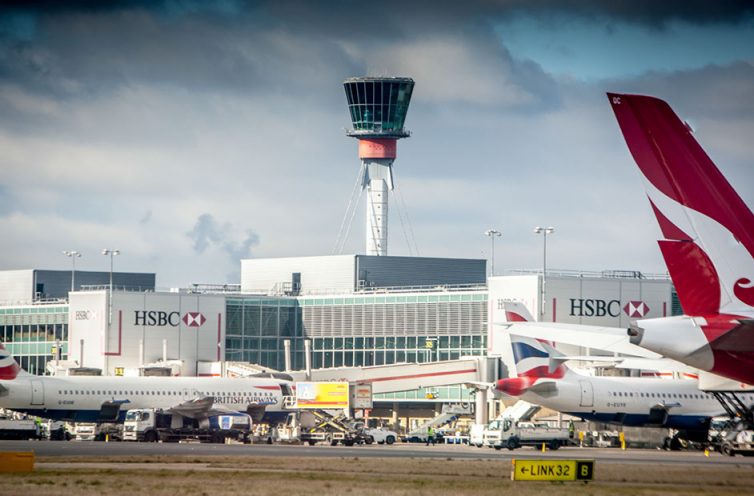
Heathrow Airport in 2026 is an airport at a crossroads — and it’s more fascinating for it. On one hand, it’s performing better than it ever has: record passengers, improving service levels, growing cargo operations, and a genuine step-up in technology investment. On the other hand, it’s bursting at the seams. Two runways, near-maximum capacity, and a once-in-a-generation infrastructure decision looming on the horizon.
Of the seven trends we’ve explored, the one I’d urge you to watch most closely is the third runway planning process. Everything else — passenger growth, technology, cargo, sustainability — feeds into that larger story. Heathrow’s long-term trajectory as a global aviation hub depends on whether the UK can finally, after decades of debate, build the infrastructure it needs.
Whether you’re a traveller, an investor, an aviation professional, or simply someone who cares about the UK’s economic infrastructure, Heathrow Airport market trends in 2026 deserve your attention. The decisions made this year will shape British aviation for the next fifty.