

Everyone tells you to go see Burg Eltz. Fine. You should. But if that’s the only castle on your Moselle Valley list, you’re doing this trip at about 30% capacity. I’ve spent a stupid amount of time poking around this river valley, and the truth is the famous postcard castle is just the opening act. The real magic of the hidden castles Moselle Valley has tucked into its vineyards and side-forests is that most tourists drive right past them, windows down, totally unaware.
This region was basically medieval real estate chaos for centuries — archbishops, counts, and robber barons all elbowing for control of the river trade. That left behind one of the highest concentrations of castles anywhere in Germany. Some are fairytale-perfect. Some are crumbling ruins you practically have to earn with a hike. Either way, they’re worth your time far more than another twenty minutes in a gift shop parking lot.
Let’s get into it.
Why the Moselle Valley Is Germany’s Castle-Lover’s Paradise
I’ll be honest: the first time I drove the Moselle, I underestimated it. I expected pretty vineyards. I did not expect to round a bend every twenty minutes and see another fortress glowering down from a cliff. That’s the thing about this valley — it wasn’t designed to be scenic. It was designed to be defensible, profitable, and fought over. The scenery is just a happy side effect of all that medieval paranoia.
A Landscape Shaped by Medieval Power and Trade
The Moselle wasn’t just a pretty river to look at from a vineyard terrace. It was a highway. Wine, salt, timber, and taxes all moved along this water, which meant whoever controlled a bend in the river controlled real money. Archbishops of Trier, local counts, minor nobility — they all wanted a piece, and they built castles to prove it.
That competitive energy is exactly why this valley has so many fortresses packed into such a small stretch of land. You’re not just looking at architecture here. You’re looking at eight hundred years of turf war, frozen mid-argument.
How the Moselle River Helped Castles Flourish
Rivers make for great toll booths. Build a castle on a cliff above a narrow bend, and suddenly every boat passing through owes you something. That’s the unglamorous economic engine behind half the castles on this list.
The hills also gave builders a natural advantage — steep slate outcrops that were nearly impossible to siege successfully, which is part of why so many of these structures are still standing (or at least standing in dramatic ruin) centuries later.
What Makes Hidden Castles More Rewarding Than Crowded Attractions
Here’s the catch with famous landmarks: by the time you’ve parked, queued, and shuffled through with three hundred other people, the magic is gone. A lesser-known ruin gives you something different — quiet, space to actually look around, and that small private thrill of finding something most people miss.
There’s also just more honest atmosphere in a half-collapsed tower with weeds growing through the courtyard than in a perfectly restored gift shop. Don’t get me wrong, I love a good restoration. But ruins tell their own story, and you don’t have to share it with a tour group of fifty.
Map of the Most Beautiful Hidden Castles in the Moselle Valley
Before we go castle by castle, it helps to see how these sites actually sit along the river. Most of them cluster between Koblenz and Trier, which makes a multi-day castle road trip extremely doable without backtracking constantly. I’ll flag nearby towns as we go so you can build a route that doesn’t have you crisscrossing the valley five times a day.
Burg Eltz: The Fairytale Castle Hidden in the Forest
Yes, I know I said this wasn’t just an Eltz article. But you cannot talk about Moselle castles without starting here, because it sets the bar for everything else on this list.
Eltz sits in the Elz Valley near Moselkern and Treis-Karden, tucked into a forested side-valley rather than directly on the Moselle itself. Thanks to its hidden location and the diplomacy of the Lords Eltz, the castle has remained unscathed by any military destruction, offering visitors a picturesque view built on a slate rock and surrounded by the Elzbach river and wooded slopes. That’s a rare thing in this region — most castles here were burned, besieged, or blown apart by French troops at some point. Eltz just… wasn’t.
What really gets me is that it’s still owned by the same family who’ve lived there since the 12th century. You’re not visiting a museum piece. You’re visiting someone’s (extremely impressive) ancestral home.
History and Architectural Highlights
The castle’s mix of turrets, oriels, and half-timbering gives it that unmistakable storybook silhouette. Eltz played a significant role in regional conflicts between feudal lords and the Archbishopric of Trier, and the Eltz family used the castle as a center of power for centuries. Inside, you’ll find 15th-century Flemish tapestries and original family furniture that’s been preserved in remarkable condition.
Best Photography Locations
The classic shot is from the small rise just before you reach the castle proper — that’s the angle on every postcard for a reason. Early morning light is your friend here. Show up at opening and you’ll get the place practically to yourself for a window of maybe twenty minutes before the tour buses arrive.
Visitor Information and Access Tips
A shuttle bus runs from the car park every ten minutes, or you can walk along the road or a footpath that passes the famous “500-DM banknote” viewpoint. Guided tours run about 40 minutes and English brochures are provided. Bring cash — parking and shuttle fees aren’t always card-friendly out here.
Schloss Lieser: A Riverside Palace Reborn
This one’s a bit of a cheat on the “hidden” theme because it’s become genuinely famous in its own right — mostly because people can’t stop comparing it to Hogwarts. But I’m including it because so many travelers driving the Moselle have no idea it exists, and it’s right on the riverbank, hard to miss once you know to look.
From Noble Residence to Luxury Landmark
Industrialist Eduard Puricelli built the house between 1884 and 1887 as a private family residence, on land that had belonged to a church since 1710. By 1981 it had fallen into disrepair, and the municipality bought it, after which it sat largely empty for about a decade. It took an investor and later the Killaars family — who spent around €12 million restoring it — to turn it into the property you see today.
Architectural Features Worth Noticing
The architecture blends Neo-Renaissance and Art Nouveau styles, with ornate staircases and meticulously preserved rooms. The riverside setting, surrounded by vineyards, is genuinely one of the prettiest backdrops on the entire river.
Experiences Nearby in Lieser
You don’t need to book a room to appreciate this one — though if your budget allows, the wine cellar and bar terrace overlooking the Moselle make a memorable stop. If not, just slow down as you pass through Lieser village and take it in from the road. The vineyard walks surrounding the property are open to the public and free.
Thurant Castle: Twin Towers Above the Moselle
This is the castle locals will tell you to visit instead of Eltz if you want something just as beautiful with a fraction of the crowd. The ruins of Thurant Castle stand on a wide slate hill spur above the village of Alken on the Moselle, in the district of Mayen-Koblenz.
Medieval Rivalries Behind the Fortress
What makes Thurant genuinely unusual is its twin-tower design — a layout born from a literal property dispute between two competing noble families who ended up splitting the castle rather than settling it peacefully. Medieval real estate drama at its finest.
Scenic Views Across the Valley
The hill spur position means you get sweeping views over Alken and the river bend below. It’s one of those spots where you just stand there for a minute longer than planned.
Highlights Inside the Castle Grounds
Visitors who’ve seen both castles often say Thurant is at least as beautiful as Eltz, just without the crowds. I won’t argue with that. The vineyards on the sunniest slopes around the castle are a nice bonus if you want to combine your visit with a wine stop.
Metternich Castle Ruins: A Hidden Gem Above Beilstein
Beilstein is the kind of village that makes you forget you’re holding a phone. It’s tiny, half-timbered, and sits right on the riverbank like it’s been forgotten by time on purpose. Above it sits Metternich Castle, also called Beilstein Castle after the town it watches over.
Why Beilstein Feels Frozen in Time
Unlike some of the more polished tourist stops on the Moselle, Beilstein hasn’t been over-renovated into a theme park version of itself. Narrow lanes, old stone steps, and a market square that feels genuinely lived-in rather than staged for visitors.
Exploring the Ruins and Viewpoints
The castle was originally built around 1120, and is today partly in ruins. Its history traces back to the Winneburg family before passing to the Lords of Metternich in 1652, whose name it still carries. Troops under Louis XIV ransacked and burned the castle in 1689, and it’s remained a ruin ever since. Despite that, the keep still stands tall alongside several defense works and viewpoints, and entry costs just a couple of euros.
Best Time to Visit
Late afternoon works beautifully here — the light catches the village rooftops below the castle walls in a way that’s genuinely hard to photograph badly. Weekday mornings are quietest if you want the ruins mostly to yourself.
Cochem Castle and the Lesser-Known Stories Around It
Cochem isn’t exactly a secret — Reichsburg Cochem sits right on the riverbank, impossible to miss. But most visitors treat it as a quick photo stop rather than digging into what makes it interesting.
The Romantic Reconstruction of Reichsburg Cochem
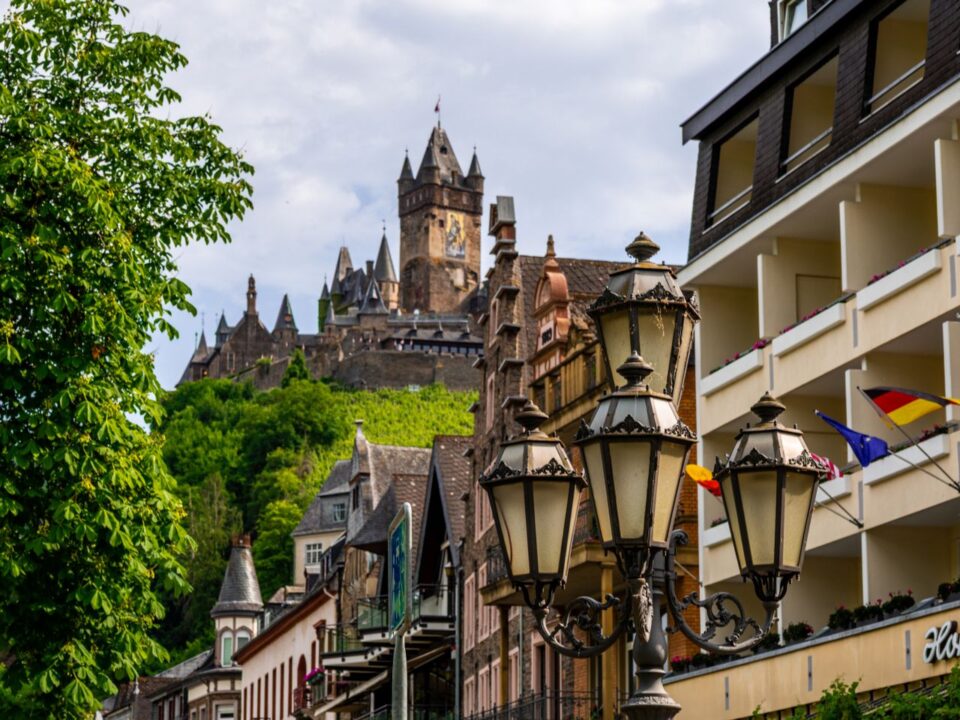
The original castle dates back to the 11th century but was completely destroyed by French soldiers in 1689 — yes, the same campaign that wrecked Metternich Castle. What you see today is largely a 19th-century romantic reconstruction, built in the era when wealthy Germans were nostalgic for medieval grandeur and willing to pay for it.
Secret Corners Most Visitors Miss
Most people do the guided tour and leave. Fewer wander the surrounding hillside paths that loop around the castle’s base, which honestly offer some of the better photo angles anyway — you get the whole silhouette against the river instead of just close-up stonework.
Nearby Historic Sites Worth Exploring
Cochem also sits close to a former Bundesbank bunker complex, a strange Cold War footnote tucked into the same hills as all this medieval history. Worth a quick mention if you’re into the contrast between knights and Cold War paranoia in the same square mile.
Veldenz Castle Ruins: One of the Valley’s Best-Kept Secrets
If you want the “I found this and nobody else was there” experience, Veldenz is probably your best bet on this entire list. Schloss Veldenz sits in the Hunsrück upland, about 1.5 kilometres southeast of Veldenz village, roughly 320 metres above sea level and 180 metres above the Moselle itself.
History of the Counts of Veldenz
The first written reference to the castle dates to 1156, and it was confirmed as a holding under Frederick I (Barbarossa) to the Bishop of Verdun. At one point, this was reportedly the largest castle along the Central Moselle — a fact that surprises most people, given how few visitors make the trip out here today.
Hiking Routes to the Ruins
This isn’t a drive-up-and-park situation. Bernkastel-Kues sits about 4 kilometres northeast, with Trier roughly 31 kilometres southwest. Plan on a proper hike through the side valley, following the Veldenzer Bach stream up into the hills. Wear actual shoes, not sandals — the trail isn’t brutal, but it’s not flat either.
Panoramic Views Across Wine Country
The payoff is a near-360-degree view across the Hunsrück hills and down toward the Moselle’s wine country. The site is also a noted viewpoint along regional cycling and hiking routes, so don’t be shocked if a mountain biker zips past you on the way up.
Pyrmont Castle: Medieval Charm Beyond the Main Tourist Route
This is the one I recommend to people who say they’re “tired of castles.” Pyrmont isn’t really about the building so much as the setting — and the setting is spectacular.
Architectural Highlights
Pyrmont Castle is enthroned on a mighty slate rock above a rushing waterfall on the Elzbach river, first mentioned in records in 1225. Its most striking feature is a 24.5-metre round bergfried, or main tower — the first of its type built in the Middle Rhine region — complete with vaulted ceilings, fireplaces, and a conical roof open at the top as a viewing platform. There’s even a 49-metre-deep well beneath the tower, which is the kind of detail that makes you appreciate just how seriously sieges were taken back then.
Waterfalls and Natural Attractions Nearby
The waterfall beneath the castle is genuinely the star of the show here. The “Pyrmonter Felsensteig” trail starting below the castle was voted Germany’s most beautiful hiking trail in 2015, so if you’ve got an extra hour, lace up and walk it.
Visitor Tips for a Quiet Experience
Because this castle sits slightly off the main river road, it tends to attract hikers and locals more than tour buses. That’s exactly why it belongs on this list — go on a weekday and you might not see another visitor for the better part of an hour.
Landshut Castle: Bernkastel-Kues’ Historic Guardian
Bernkastel-Kues gets plenty of love for its market square, but a lot of visitors never make the climb up to the castle ruins watching over the whole town.
A Fortress Overlooking the Vineyards
Landshut sits as part of a chain of hilltop fortifications originally built to protect the Moselle as a waterway and to guard the route toward Trier, with Emperor Constantius I regarded as the initiator of the system. It dates back to a 4th-century Roman fortification and has stood as a ruin since a fire in 1682, though it’s since been thoughtfully restored.
The Best Observation Points
The restaurant inside the castle grounds offers a genuinely spectacular view over Bernkastel-Kues and the surrounding Moselle valley — worth timing your visit around a meal or at least a glass of wine if you can manage it.
Combining the Castle With a Town Walk
It’s reachable on foot, by a small tourist shuttle, or by car, and it’s a steep, long climb from town, so most people opt for the drive unless they’re feeling ambitious. Pair it with a wander through Bernkastel’s old town afterward — the two halves of the experience complement each other nicely.
Hidden Palace Estates Along the Moselle River
Beyond the headline castles, the Moselle is dotted with smaller noble residences and manor estates that rarely make it onto a typical itinerary.
Lesser-Known Noble Residences
Many of these are privately owned or only partially open to the public, but they’re often visible from the road or from village walking paths. Keep an eye out as you drive between towns — half the fun of this region is spotting a turret you didn’t know was there.
Historic Manor Houses and Country Estates
Smaller estates tied to wine production are common throughout the valley, many still functioning as working vineyards today. These rarely show up in guidebooks but make for great unplanned stops if you see a sign for wine tastings near an old manor gate.
Architectural Styles Found Across the Region
You’ll notice a real mix here — Romanesque defensive towers next to Baroque additions next to 19th-century romantic reconstructions. It’s basically a layered timeline of German architectural taste, all visible within a single river valley.
Scenic Castle Routes Through the Moselle Valley
Planning logistics isn’t glamorous, but it matters. Here’s how I’d structure it depending on how much time you’ve got.
One-Day Castle Road Trip
If you only have a day, prioritize Burg Eltz, Thurant Castle, and Cochem Castle. They sit close enough together that you’re not burning your whole afternoon in the car, and you get a good mix of fairytale, ruin, and reconstruction in one trip.
Weekend Castle Exploration Itinerary
With two days, add Beilstein and Metternich Castle to day one, then dedicate day two to Bernkastel-Kues, Landshut Castle, and Veldenz if you’re up for the hike. This kind of two-day split — one day around Bernkastel-Kues and Traben-Trarbach, one around Beilstein — is a pattern plenty of seasoned Moselle travelers land on naturally.
Combining Castles With Wine Villages
Honestly, don’t try to separate the castles from the wine. This valley’s history is so tied to vineyard income that visiting one without the other feels incomplete. Most castle stops sit within walking distance of a tasting room or vineyard trail anyway.
Best Seasons for Visiting Hidden Castles in the Moselle Valley
Spring Blossoms and Fresh Vineyard Views
Late April through May brings green hillsides and far fewer crowds than peak summer. The ruins especially photograph beautifully against fresh vineyard growth.
Summer Festivals and Extended Opening Hours
Summer is peak season for a reason — longer daylight, more open attractions, and regional wine festivals worth timing a trip around. Just expect company at the famous sites.
Autumn Colors Across the River Valley
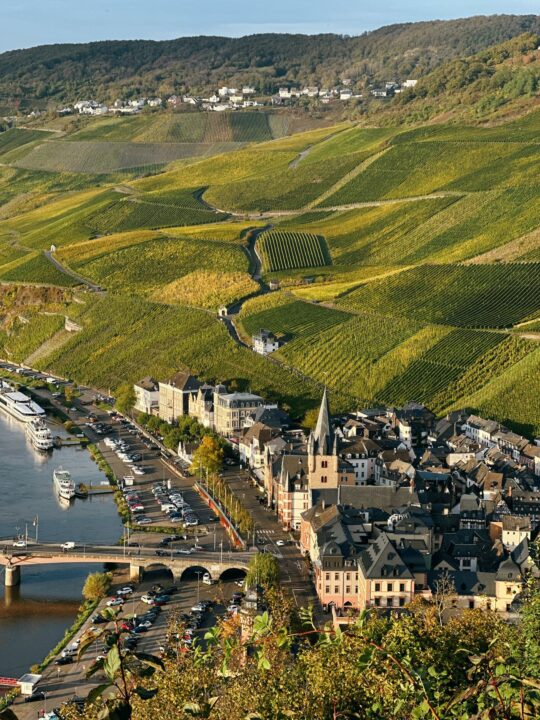
If I had to pick one season, it’s autumn. Harvest season turns the vineyards gold and copper, and there’s something about a half-ruined castle against fall foliage that just hits differently.
Winter Atmosphere Around Historic Sites
Quiet, moody, occasionally foggy in a way that makes the ruins genuinely atmospheric. Some smaller sites reduce hours or close entirely, so check ahead before building a winter itinerary around them.
Photography Tips for Capturing Moselle Valley Castles
Sunrise Viewpoints
Early light hits the river mist beautifully, especially around Beilstein and Cochem where the castles sit close to the water. Worth the early alarm.
Drone Photography Considerations
Germany has fairly strict drone regulations, especially near historic sites and populated areas. Check local rules before flying — some castle sites restrict it outright, and fines aren’t worth the shot.
Best Riverbank Perspectives
Honestly, some of the best castle shots come from across the river, not from directly beneath the walls. Thurant and Schloss Lieser in particular benefit from a wide shot that includes the water and vineyards in frame.
Practical Travel Tips Before Exploring Moselle Valley Castles
Transportation Options
A car genuinely makes this trip easier — many of these castles sit just outside towns with limited public transit. That said, trains do connect to villages like Moselkern for the Eltz hike if you’re traveling car-free.
Entrance Fees and Opening Times
Fees are generally modest — a couple of euros for sites like Metternich Castle — but bring cash regardless. Smaller ruins often run on the honor system or have limited card readers.
Accommodation Bases for Castle Exploration
Bernkastel-Kues and Cochem both make solid home bases with good restaurant options and central locations for day-tripping. If you want to splurge once, Schloss Lieser is hard to beat for atmosphere.
Responsible Tourism Guidelines
Stick to marked paths around ruins — erosion is a real issue at some of the less-maintained sites. And honestly, just be a decent guest. These are living villages, not theme parks.
Nearby Attractions That Pair Perfectly With Castle Visits
Historic Wine Villages
Traben-Trarbach, Bernkastel-Kues, and Beilstein each offer a completely different flavor of “charming German wine town,” and honestly you should see all three if your schedule allows.
River Cruises Along the Moselle
A short river cruise gives you a totally different vantage point on these castles — looking up at them from the water instead of down at the valley from the ramparts.
Scenic Hiking Trails and Viewpoints
Beyond the castle-specific trails mentioned above, the broader Moselsteig long-distance path threads through much of this region if you want a longer multi-day hiking option.
Planning an Unforgettable Hidden Castles Moselle Valley Journey
So here’s where I land on all this: Burg Eltz earns its fame, no argument there. But the real reward of this valley is everything around it — Thurant’s twin towers, Metternich watching over sleepy Beilstein, Veldenz rewarding the few people willing to hike for it, Pyrmont’s waterfall doing more for the imagination than any gift shop ever could.
If you’re planning a trip built around hidden castles Moselle Valley has scattered through its hills, don’t rush it. Give yourself at least a weekend, pair the ruins with the wine, and let yourself get a little lost on the back roads. That’s usually where the best version of this trip happens anyway.
FAQ Section
Which hidden castles in the Moselle Valley are worth visiting
Thurant Castle, Metternich Castle above Beilstein, Veldenz Castle ruins, Pyrmont Castle, and Landshut Castle near Bernkastel-Kues all offer a quieter alternative to the more famous stops, each with its own distinct character.
Is Burg Eltz located in the Moselle Valley
Yes — Burg Eltz sits in the Moselle Valley region, near Koblenz and Trier, though it’s tucked into a forested side-valley rather than directly on the riverbank.
What is the most beautiful castle along the Moselle River
Burg Eltz tends to win that title for most travelers thanks to its fairytale silhouette and untouched history. That said, plenty of regulars argue Thurant Castle is every bit as stunning with far smaller crowds.
How many castles are found in the Moselle Valley region
Dozens, when you count both intact castles and ruins scattered through the valley and its side-hills — far more than most travelers realize before they start exploring.
Can you visit Moselle Valley castles without a car
It’s possible for some — Burg Eltz is reachable by train to Moselkern followed by a walk — but many of the smaller, lesser-known sites are easiest reached by car given limited rural transit options.
What is the best time to explore hidden castles in the Moselle Valley
Autumn offers the best mix of mild weather, fewer crowds, and dramatic vineyard color, though spring and summer both have their own appeal depending on what you’re after.
Are there castle hotels in the Moselle Valley
Yes — Schloss Lieser, originally an 1884 industrialist’s residence, now operates as a luxury hotel right on the riverbank.
How many days should you spend exploring Moselle Valley castles
A long weekend hits the sweet spot — enough time to see the highlights without rushing, plus room for a wine stop or two along the way.