

When you’re scouting a co-living base surrounded by forest instead of a city block, connectivity is the make-or-break detail. Estonia and Latvia are two of the few countries where that combination is realistic: both have pushed 5G rollout hard over the past two years, and both still have vast, genuinely wild forest cover close to their capitals.
This guide covers what’s actually out there, what “forest co-living” means in the Baltics right now, and how to verify 5G coverage at a specific address before you commit to a booking — because “near the forest” and “in the forest” can mean very different signal strength.
Why Estonia and Latvia for forest-based remote work
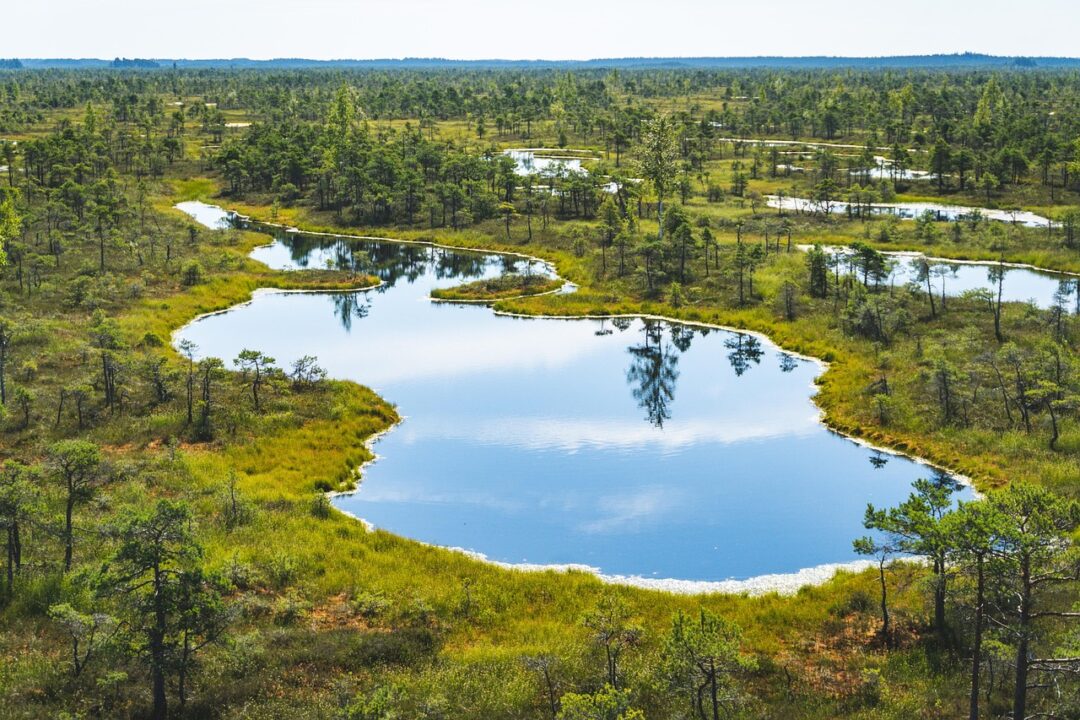
Forests cover roughly half of Estonia’s land area, and Latvia is similarly wooded, so “co-living near the forest” is less a niche marketing angle here and more the default setting outside the two capitals. Both governments have also treated connectivity as core infrastructure rather than an amenity. Estonia has been expanding 5G toward nationwide reach, with major operators targeting around 90% population coverage, and pushing signal along highways and into smaller communities, not just city centers. Latvia’s national digital strategy sets a formal target of 5G in all large urban areas alongside gigabit-capable broadband for rural regions, with state-backed projects specifically extending infrastructure into the countryside.
The two countries are also coordinating with each other. The Via Baltica and Rail Baltica transport corridors are the subject of a joint 5G corridor study between Estonia, Latvia, and Lithuania, aimed at keeping signal continuous across the region, including the cross-border stretch near Valka and Valga. That matters if your forest co-living stay is a base for exploring both countries rather than a single fixed location.
What “forest co-living” actually looks like right now
Don’t expect a polished chain of “forest co-living” branded properties the way you’d find city coworking chains. The Baltic scene is smaller and more independent: renovated countryside estates, converted farmhouses, and rural retreats that combine private rooms, shared kitchens, saunas, and a coworking room, usually run by a small local team rather than a franchise.
One concrete example is ILand Coliving & Coworking in Valjala Parish, Estonia — a working farm and countryside complex with over a century of history, offering shared living and workspace set among fields, orchards, and forest edges. Properties like this are typical of the category: fewer beds than an urban co-living building, a strong community feel, and location-dependent connectivity rather than guaranteed fiber-grade 5G on site.
Tallinn and Riga themselves also host established co-living operators with easy access to nearby nature reserves like Lahemaa National Park (Estonia) and Gauja National Park (Latvia), which is a reasonable middle ground if you want forest access on weekends without gambling on rural signal during the week.
How to verify 5G coverage before you book
“5G coverage” on a listing page is a marketing claim, not a guarantee. Check it yourself with these steps:
- Use official coverage maps. Estonia’s Consumer Protection and Technical Regulatory Authority (TTJA) runs a public Communications Coverage Application showing service availability by location. Cross-check with independent tools like nPerf’s operator-by-operator coverage maps.
- Ask which operator, not just “5G.” Coverage varies by carrier. In Estonia, Tele2’s 5G footprint has been expanding aggressively toward rural and highway areas; other operators may lag in the same location.
- Check the property’s exact coordinates, not the nearest town. Forested and low-population areas, islands, and dense woodland can still have weaker signal even when the surrounding region shows good coverage on a national map.
- Ask the host directly. A quick message asking for a recent speed test screenshot taken on-site is more reliable than any coverage map.
- Have a backup. A local eSIM from a second operator is cheap insurance if you’re relying on connectivity for work calls.
What to look for in a listing
- Private room with a door that closes, for video calls
- A dedicated coworking or desk space, not just a kitchen table
- Confirmed fiber or cable backup internet, not phone signal alone
- Distance to the nearest town for groceries and emergencies
- Community size that matches what you want — a 6-room countryside house feels very different from a 40-bed complex
Where to search
Estonia and Latvia both have limited but growing listings on general coliving platforms (coliving.com, freakingnomads.com, and the Coliving Community directory), plus rural-specific channels like Workaway for farm-based stays in areas such as Latvia’s Gauja National Park and Vidzeme Highlands. Local Facebook groups for digital nomads and expats in Tallinn and Riga are also worth checking, since smaller countryside operators often don’t run polished websites.
The bottom line
Estonia and Latvia are genuinely good bets for forest-based co-living with usable connectivity, but “5G in the forest” is a location-specific fact, not a country-wide guarantee. Treat any listing’s connectivity claim as a starting point, verify it against operator coverage maps or a host-provided speed test, and keep a backup SIM on hand if your work depends on it.